
إظهار الرسائل ذات التسميات Destinations. إظهار كافة الرسائل
Omnia Card : Le Pass Vatican & Rome
Are you going to Rome soon? Are you looking for a pass for the Vatican and Rome? If so, the pass you need is the Omnia Card, the only Rome + Vatican pass.
In this post dedicated to the Omnia map of Rome, we will discuss together the advantages offered by this pass for Rome and the Vatican. What visits are included in the Omnia Card? What is the price of the Omnia Card? Where to reserve Is this pass worth the Vatican? All these topics will be mentioned in this post dedicated to the Pass of Rome and the Vatican.

I'll also tell you where to buy the Omnia Card on the web and at the best price (if you're in a hurry, it's here).
And raising you has been the greatest satisfaction of my life.” Sirona began to weep. She felt as if her life was over. For as long she could remember, all her energies were focused on being a Drui. Now that could never be. Nesta embraced her, holding Sirona against her frail, bony body. After a time, Nesta gently drew away. “There’s something else I must tell you. Something that Tarbelinus requires in exchange for your escort. It’s a small thing, and one that—out of kindness—you should be willing to do.” Sirona gazed at her grandmother warily. “What does Tarbelinus want?” “He wants you to tell Bryn that you don’t return his affections.” Sirona gave a quick, bitter laugh.
“Why should that matter? I’m sure Tarbelinus has made it very clear to his son that he can have no future with me.” “That’s true. But Tarbelinus would prefer it if you told Bryn these things yourself. The chieftain has only recently discovered Bryn’s... fondness for you, and I think it reminds him of his own unreasoning passion for Banon all those years ago. He realizes Bryn won’t give up easily, and he thinks the best way to end his son’s hopes is for you to make it clear you don’t love him.” Nesta paused and her forehead furrowed. “That’s true, isn’t it? You don’t return Bryn’s feelings?” Sirona considered carefully. She’d grown up with Bryn, and until recently thought of him as a brother.
But now, facing the prospect of losing him, she could see how much she’d come to depend him... and care for him. Those feelings might have turned into love if given the chance. But that could never happen now. “Sirona?” Nesta prompted. She met her grandmother’s gaze, “What would it matter if I said I loved Bryn? Tarbelinus would never allow us to be together.” “That’s true,” Nesta agreed. “And given that fact, no matter what you feel, it would be kindest if you told Bryn that you don’t care for him the way he does you. There’s no point making him yearn for something that can never come to pass.” The aching sense of loss inside Sirona deepened. There was no chance she and Bryn could ever be together. It would be cruel to make him continue to hope for such a thing. She nodded slowly. “Very well. I will do as Tarbelinus asks.” Nesta looked relieved. “You must speak to him soon. Tarbelinus is much more likely to be generous in the supplies he sends with you if he knows you have fulfilled your part of the bargain. As a matter of fact, I’ll fetch Bryn now.” While she waited, Sirona felt the bitterness build inside her. She was sick of Tarbelinus and his belief that he could control the lives of those around him. He’d manipulated Bryn all his life, and now he sought to command even his son’s heart.
A moment later, Bryn pushed his way into the hut. “You wanted to see me.” Warm brown eyes met hers. Seeing the longing and despair in their depths, Sirona’s heart twisted. Poor Bryn, forced into a life he despised, and all because of Banon’s prediction. She cleared her throat. “As you know, I’m going north.” “You mean, my father’s sending you north.” His voice was edged with fury. She shrugged. “The fact is, I’ll be far away from here. It’s likely I’ll never return.” “I could go with you.” Hope sprang into Bryn’s eyes. “Your father would never allow it.” His fierce gaze met hers. “I could follow you. I’m a man now. My father doesn’t control me.” If only Bryn could come with her. It would make all the difference. Her other losses would be almost bearable. But then reason returned and she shook her head. “Your father would pursue us, and when he found us, he would have his warriors drag you back to Mordarach. As for me... it’s likely he would have me killed.” Bryn stared at her.
Then he nodded. “I could come and find you later.” Sirona remembered Nesta’s words. It wasn’t fair to allow Bryn to plan his whole life around her. She must force him to face the finality of the situation. “My grandmother... she implied that in order to be accepted into another tribe, I will have to handfast with one of their warriors.” “Why not handfast with me?” Bryn implored. Sirona winced, knowing the pain her words would cause. “Because you’re not a warrior, and except in your father’s tribe, you have no hearth to call your home.” Bryn looked as if he had been dealt a brutal blow. “It’s true,” he finally said in a ravaged voice. “But only because I haven’t been given a choice.” Sirona ached for him. There must be some way to ease his despair. All at once, it came to her.
“You were right, Bryn. I do have visions of the future. In fact, I’ve had one of you. In it, you were dressed in battle attire. You appeared to me as a warrior.” His face lit up. “A warrior? What do you think it means?” “Perhaps it’s time for you to leave Mordarach, find a place in another tribe and train as a warrior with them. I don’t think any chieftain would turn away an able-bodied young man who vowed to serve him.” “Perhaps a tribe in the north?” Bryn said hopefully. “Nay. If you travel the same direction as I do, Tarbelinus would surely find you and bring you back. You must set out east or west or south, so your father doesn’t realize where you’ve gone until you’re far away.” Bryn nodded. “It’s a good plan.” He smiled at her faintly. “And since it was given to me by a seeress, I know it’s what I must do. I’ll find another tribe to train with. When I’m a blooded warrior and have a place in a tribe, I’ll come and find you.” His brown eyes burned into Sirona’s. The love she saw there both warmed her heart and tore it to pieces. It seemed to her that few people in life ever realized their dreams.
If Bryn got his chance to be a warrior, he must be content with that. But what if her mother’s prediction for Bryn came true? What if by encouraging him to pursue his dream, she ended up sending Bryn to his death? She must tell him of her mother’s prophecy and let him decide for himself. “There’s one more thing, Bryn... the reason your father has refused to allow you to train as a fighting man. When you were a baby, it was predicted...” She could not bring herself to mention her mother, “if you became a warrior, you would die in the first battle you fought in.” She held her breath, waiting for Bryn’s reaction. He stared at her, eyes bright with emotion. “If I die, I die. But at least I will die knowing I have fulfilled my destiny. All the years training in the grove have taught me not to fear death. But I do fear not fully living my life while I remain in this realm.” Sirona nodded. She felt certain she was doing the right thing in freeing Bryn from the crippling control of his father. Only by leaving Mordarach could he ever have a chance for happiness. That happiness might be fleeting, but at least he would know it for a time. But what of her? She was losing everything, and all because she’d followed what she thought was the Goddess’s plan for her. That night at the mound and circle of stones had been magical, but not enough to make up for what she now faced. And even that experience was flawed. Because of her fear, she had rejected Cruthin and lost the opportunity to know sex magic.
Her failure gnawed at her, despite her anger at Cruthin for leaving her. Bryn interrupted her thoughts. “Sirona, in your vision, did you see any sign or symbol on my shield that might tell me what tribe I will fight for?” She frowned in concentration, trying to remember. “You were older... with the long mustache of a warrior. You wore a kind of leather garment on your chest. I didn’t really take note of the colors you wore. But there was...” Her gaze snapped up to meet his. “... there was the outline of a white horse on your shield.” “A white horse?” She nodded. “I’ve never heard of a tribe that used such a symbol,” he said, his eyes wide in wonder. “Then perhaps you’ll have to search for them.” “I wish you would have told me this when we were still at the gathering. I could have asked around to find out which tribe uses the white horse as a battle emblem.” Sirona touched his arm. “Don’t let what I have told you guide your life too completely. So far, none of the things I’ve seen have come to pass. Instead, follow what is in your heart, what you sense the gods are telling you to do.” Bryn smiled sadly. “It’s true that I have a long way to go before I’m worthy of handfasting with you. But someday, Sirona, I will be a warrior. Someday when you need protection, I’ll be there. I won’t fail you.”
As Bryn turned and left her—ducking awkwardly under the low porch of the hut as his father had before him—Sirona felt the tears begin to fall. She wasn’t certain what she wept most for: her own loss, or Bryn’s heartbreaking innocence of the cruelties of life. * * * Her circumstances were so luxurious as to be almost embarrassing, Sirona thought as they left Mordarach. Tarbelinus had provided a cart for her to ride in and two warriors to guard her. He’d also offered to send a bondswoman to wait upon her, but Sirona had refused. She didn’t see why some other young woman’s life should be disrupted along with hers. Sitting back in the cart, which was filled with sheepskins, blankets, cooking utensils and her new garments, she contemplated how different her “banishment” was from her mother’s. Her mother had left on foot, carrying few supplies, while Sirona was well provided for. Yet despite her comfortable circumstances, she felt a yawning emptiness. The idea of going to live with a northern tribe seemed like a tale told about someone else. She couldn’t imagine it, this new life among a people she’d never met. Although she tried to see some vision of her future, nothing came to her. As they traveled farther and farther away from Mordarach, her sense of despair deepened. She was leaving everything she’d ever known. Her grandmother, whom she’d never truly appreciated. The world of the grove, which had filled her days and shaped her thoughts. It seemed like she was dying, as surely as Banon had died. To the people of Mordarach, she would be dead. Like Cruthin, she would cease to exist to them. Cruthin. She wondered where he was.
Had he returned to the mound on the sacred isle? Gone back to the mainland? She tried to see him in her mind, to catch some glimpse and reassure herself that he yet lived. But she saw nothing. She cursed silently. What was the point of having visions if they wouldn’t come when she needed them most? Her anguish deepened, and tears blurred her eyes as she watched the scenery pass. She became aware of a change in the landscape and realized they were leaving the highlands. The hills weren’t as steep here and the contours of the land were a little softer. They were traveling into the territory of the Cornovii. With each step the oxen took, the pain built inside her. Finally, overcome, she called out to the two men. “Please, stop. I need to...” She searched her mind for some excuse to go off into the woods and spend her grief in private. “I need to relieve myself,” she finished.
They halted the oxen. Sirona grabbed her pack and climbed down from the cart. As she started off into the woods, the tears welled up in earnest. By the time she reached deep forest, she was sobbing. She staggered forward, half blinded. Gradually she realized that if she went too far, she might get lost, and her fear of being left alone in strange territory caused her to halt. She slid to the ground and rubbed at her swollen eyes. Gazing up bleakly at the sky, she wished it were night time, so that she could see the moon. Arianrhod’s silver light would comfort her.
Vatican Pass: A pass to visit Rome and the Vatican
Do you wonder if there is a Vatican pass for Rome? If it is financially interesting? If there are other countries to visit the Vatican and the rest of Rome?
The first thing to know, there is only one Vatican + Rome pass. This pass is called the Omnia Card. There is another Rome Pass, but it is limited to some visits to Rome and does not cover any visit to the Vatican.
Vatican & Vatican Pass Price review: A great price!
The price of the Omnia Card may seem high. However, when comparing the price of the different tickets of the unit, whether for the Vatican, for key tours of Rome or for public transport in the city, you quickly realize that the Omnia map of Rome is financially interesting. to calculate visit per visit to make your opinion about the Omnia Card.
Also, with the pass for Rome and the Vatican, you get access to the line, a real advantage.
Finally, with the Omnia card, you can take advantage of small additional benefits, such as the bus tour of Rome with the bus stop open, the Hop On Hop Off bus from Rome and the Vatican. Convenient to get around in some parts of the city and discover several neighborhoods without much walking.
We must see the price of the Vatican / Rome pass, but also the additional benefits that you can not have without going through the purchase of the Omnia Card.
In this post dedicated to the Omnia map of Rome, we will discuss together the advantages offered by this pass for Rome and the Vatican. What visits are included in the Omnia Card? What is the price of the Omnia Card? Where to reserve Is this pass worth the Vatican? All these topics will be mentioned in this post dedicated to the Pass of Rome and the Vatican.
I'll also tell you where to buy the Omnia Card on the web and at the best price (if you're in a hurry, it's here).
And raising you has been the greatest satisfaction of my life.” Sirona began to weep. She felt as if her life was over. For as long she could remember, all her energies were focused on being a Drui. Now that could never be. Nesta embraced her, holding Sirona against her frail, bony body. After a time, Nesta gently drew away. “There’s something else I must tell you. Something that Tarbelinus requires in exchange for your escort. It’s a small thing, and one that—out of kindness—you should be willing to do.” Sirona gazed at her grandmother warily. “What does Tarbelinus want?” “He wants you to tell Bryn that you don’t return his affections.” Sirona gave a quick, bitter laugh.
“Why should that matter? I’m sure Tarbelinus has made it very clear to his son that he can have no future with me.” “That’s true. But Tarbelinus would prefer it if you told Bryn these things yourself. The chieftain has only recently discovered Bryn’s... fondness for you, and I think it reminds him of his own unreasoning passion for Banon all those years ago. He realizes Bryn won’t give up easily, and he thinks the best way to end his son’s hopes is for you to make it clear you don’t love him.” Nesta paused and her forehead furrowed. “That’s true, isn’t it? You don’t return Bryn’s feelings?” Sirona considered carefully. She’d grown up with Bryn, and until recently thought of him as a brother.
But now, facing the prospect of losing him, she could see how much she’d come to depend him... and care for him. Those feelings might have turned into love if given the chance. But that could never happen now. “Sirona?” Nesta prompted. She met her grandmother’s gaze, “What would it matter if I said I loved Bryn? Tarbelinus would never allow us to be together.” “That’s true,” Nesta agreed. “And given that fact, no matter what you feel, it would be kindest if you told Bryn that you don’t care for him the way he does you. There’s no point making him yearn for something that can never come to pass.” The aching sense of loss inside Sirona deepened. There was no chance she and Bryn could ever be together. It would be cruel to make him continue to hope for such a thing. She nodded slowly. “Very well. I will do as Tarbelinus asks.” Nesta looked relieved. “You must speak to him soon. Tarbelinus is much more likely to be generous in the supplies he sends with you if he knows you have fulfilled your part of the bargain. As a matter of fact, I’ll fetch Bryn now.” While she waited, Sirona felt the bitterness build inside her. She was sick of Tarbelinus and his belief that he could control the lives of those around him. He’d manipulated Bryn all his life, and now he sought to command even his son’s heart.
A moment later, Bryn pushed his way into the hut. “You wanted to see me.” Warm brown eyes met hers. Seeing the longing and despair in their depths, Sirona’s heart twisted. Poor Bryn, forced into a life he despised, and all because of Banon’s prediction. She cleared her throat. “As you know, I’m going north.” “You mean, my father’s sending you north.” His voice was edged with fury. She shrugged. “The fact is, I’ll be far away from here. It’s likely I’ll never return.” “I could go with you.” Hope sprang into Bryn’s eyes. “Your father would never allow it.” His fierce gaze met hers. “I could follow you. I’m a man now. My father doesn’t control me.” If only Bryn could come with her. It would make all the difference. Her other losses would be almost bearable. But then reason returned and she shook her head. “Your father would pursue us, and when he found us, he would have his warriors drag you back to Mordarach. As for me... it’s likely he would have me killed.” Bryn stared at her.
Then he nodded. “I could come and find you later.” Sirona remembered Nesta’s words. It wasn’t fair to allow Bryn to plan his whole life around her. She must force him to face the finality of the situation. “My grandmother... she implied that in order to be accepted into another tribe, I will have to handfast with one of their warriors.” “Why not handfast with me?” Bryn implored. Sirona winced, knowing the pain her words would cause. “Because you’re not a warrior, and except in your father’s tribe, you have no hearth to call your home.” Bryn looked as if he had been dealt a brutal blow. “It’s true,” he finally said in a ravaged voice. “But only because I haven’t been given a choice.” Sirona ached for him. There must be some way to ease his despair. All at once, it came to her.
“You were right, Bryn. I do have visions of the future. In fact, I’ve had one of you. In it, you were dressed in battle attire. You appeared to me as a warrior.” His face lit up. “A warrior? What do you think it means?” “Perhaps it’s time for you to leave Mordarach, find a place in another tribe and train as a warrior with them. I don’t think any chieftain would turn away an able-bodied young man who vowed to serve him.” “Perhaps a tribe in the north?” Bryn said hopefully. “Nay. If you travel the same direction as I do, Tarbelinus would surely find you and bring you back. You must set out east or west or south, so your father doesn’t realize where you’ve gone until you’re far away.” Bryn nodded. “It’s a good plan.” He smiled at her faintly. “And since it was given to me by a seeress, I know it’s what I must do. I’ll find another tribe to train with. When I’m a blooded warrior and have a place in a tribe, I’ll come and find you.” His brown eyes burned into Sirona’s. The love she saw there both warmed her heart and tore it to pieces. It seemed to her that few people in life ever realized their dreams.
If Bryn got his chance to be a warrior, he must be content with that. But what if her mother’s prediction for Bryn came true? What if by encouraging him to pursue his dream, she ended up sending Bryn to his death? She must tell him of her mother’s prophecy and let him decide for himself. “There’s one more thing, Bryn... the reason your father has refused to allow you to train as a fighting man. When you were a baby, it was predicted...” She could not bring herself to mention her mother, “if you became a warrior, you would die in the first battle you fought in.” She held her breath, waiting for Bryn’s reaction. He stared at her, eyes bright with emotion. “If I die, I die. But at least I will die knowing I have fulfilled my destiny. All the years training in the grove have taught me not to fear death. But I do fear not fully living my life while I remain in this realm.” Sirona nodded. She felt certain she was doing the right thing in freeing Bryn from the crippling control of his father. Only by leaving Mordarach could he ever have a chance for happiness. That happiness might be fleeting, but at least he would know it for a time. But what of her? She was losing everything, and all because she’d followed what she thought was the Goddess’s plan for her. That night at the mound and circle of stones had been magical, but not enough to make up for what she now faced. And even that experience was flawed. Because of her fear, she had rejected Cruthin and lost the opportunity to know sex magic.
Her failure gnawed at her, despite her anger at Cruthin for leaving her. Bryn interrupted her thoughts. “Sirona, in your vision, did you see any sign or symbol on my shield that might tell me what tribe I will fight for?” She frowned in concentration, trying to remember. “You were older... with the long mustache of a warrior. You wore a kind of leather garment on your chest. I didn’t really take note of the colors you wore. But there was...” Her gaze snapped up to meet his. “... there was the outline of a white horse on your shield.” “A white horse?” She nodded. “I’ve never heard of a tribe that used such a symbol,” he said, his eyes wide in wonder. “Then perhaps you’ll have to search for them.” “I wish you would have told me this when we were still at the gathering. I could have asked around to find out which tribe uses the white horse as a battle emblem.” Sirona touched his arm. “Don’t let what I have told you guide your life too completely. So far, none of the things I’ve seen have come to pass. Instead, follow what is in your heart, what you sense the gods are telling you to do.” Bryn smiled sadly. “It’s true that I have a long way to go before I’m worthy of handfasting with you. But someday, Sirona, I will be a warrior. Someday when you need protection, I’ll be there. I won’t fail you.”
As Bryn turned and left her—ducking awkwardly under the low porch of the hut as his father had before him—Sirona felt the tears begin to fall. She wasn’t certain what she wept most for: her own loss, or Bryn’s heartbreaking innocence of the cruelties of life. * * * Her circumstances were so luxurious as to be almost embarrassing, Sirona thought as they left Mordarach. Tarbelinus had provided a cart for her to ride in and two warriors to guard her. He’d also offered to send a bondswoman to wait upon her, but Sirona had refused. She didn’t see why some other young woman’s life should be disrupted along with hers. Sitting back in the cart, which was filled with sheepskins, blankets, cooking utensils and her new garments, she contemplated how different her “banishment” was from her mother’s. Her mother had left on foot, carrying few supplies, while Sirona was well provided for. Yet despite her comfortable circumstances, she felt a yawning emptiness. The idea of going to live with a northern tribe seemed like a tale told about someone else. She couldn’t imagine it, this new life among a people she’d never met. Although she tried to see some vision of her future, nothing came to her. As they traveled farther and farther away from Mordarach, her sense of despair deepened. She was leaving everything she’d ever known. Her grandmother, whom she’d never truly appreciated. The world of the grove, which had filled her days and shaped her thoughts. It seemed like she was dying, as surely as Banon had died. To the people of Mordarach, she would be dead. Like Cruthin, she would cease to exist to them. Cruthin. She wondered where he was.
Had he returned to the mound on the sacred isle? Gone back to the mainland? She tried to see him in her mind, to catch some glimpse and reassure herself that he yet lived. But she saw nothing. She cursed silently. What was the point of having visions if they wouldn’t come when she needed them most? Her anguish deepened, and tears blurred her eyes as she watched the scenery pass. She became aware of a change in the landscape and realized they were leaving the highlands. The hills weren’t as steep here and the contours of the land were a little softer. They were traveling into the territory of the Cornovii. With each step the oxen took, the pain built inside her. Finally, overcome, she called out to the two men. “Please, stop. I need to...” She searched her mind for some excuse to go off into the woods and spend her grief in private. “I need to relieve myself,” she finished.
They halted the oxen. Sirona grabbed her pack and climbed down from the cart. As she started off into the woods, the tears welled up in earnest. By the time she reached deep forest, she was sobbing. She staggered forward, half blinded. Gradually she realized that if she went too far, she might get lost, and her fear of being left alone in strange territory caused her to halt. She slid to the ground and rubbed at her swollen eyes. Gazing up bleakly at the sky, she wished it were night time, so that she could see the moon. Arianrhod’s silver light would comfort her.
Vatican Pass: A pass to visit Rome and the Vatican
Do you wonder if there is a Vatican pass for Rome? If it is financially interesting? If there are other countries to visit the Vatican and the rest of Rome?
The first thing to know, there is only one Vatican + Rome pass. This pass is called the Omnia Card. There is another Rome Pass, but it is limited to some visits to Rome and does not cover any visit to the Vatican.
Vatican & Vatican Pass Price review: A great price!
The price of the Omnia Card may seem high. However, when comparing the price of the different tickets of the unit, whether for the Vatican, for key tours of Rome or for public transport in the city, you quickly realize that the Omnia map of Rome is financially interesting. to calculate visit per visit to make your opinion about the Omnia Card.
Also, with the pass for Rome and the Vatican, you get access to the line, a real advantage.
Finally, with the Omnia card, you can take advantage of small additional benefits, such as the bus tour of Rome with the bus stop open, the Hop On Hop Off bus from Rome and the Vatican. Convenient to get around in some parts of the city and discover several neighborhoods without much walking.
We must see the price of the Vatican / Rome pass, but also the additional benefits that you can not have without going through the purchase of the Omnia Card.
What To Do In Venice: Tips To Visit Venice
Visit Venice, something to do at least once in your life. The Serenissima is often considered too touristy, like a museum city. However, the visit of Venice remains a necessity to do in Italy. What to do in Venice What places of interest do you need to visit in Venice?
In this guide to the city dedicated to this famous city of Italy, we will evoke everything that is useful to know before visiting Venice. Of course we will see places to see, we will talk about things to do in Venice. But not only! A full part of this guide will cover the practical aspects of a stay: where to stay in Venice, how to get around, when to go, ... and many other topics will be mentioned in this publication.
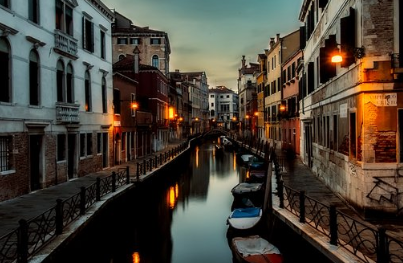
After reading this post, if you still have questions about visiting Venice, things to do in Venice or purely practical aspects, do not hesitate to leave a comment at the end of this post. . Very often, I respond quickly to comments posted on the blog! In addition, exchanges of comments are often useful for other blog readers who are wondering what to do in Venice and who plan to visit the city soon ...
A sob welled up inside her. She pressed her fist into her mouth to stifle it. Please, Great Mother, help me! She recalled what she had experienced at the mound and the circle of stones—the light from the sky, the people who appeared out of nowhere, the image of Cruthin as Cernunnos. She’d known great magic. But was one night of dazzling wonder worth losing her life? Some time later, she heard Fiach’s voice outside the tent. She moved near the entrance, hoping to learn what their fate would be. A moment later, there was a strangled sound. “He’s gone,” Fiach cried. “Sirona!” Fiach thrust himself into her tent and dragged her out. “Where is he?” Fiach demanded, looming over her. “Where is he?” Sirona shook her head, too startled and stunned to answer. Bryn, who was standing nearby, seized Fiach’s cloak and tried to pull him away. “Leave her alone!” he shouted. “How dare you assault me!” Fiach cried, twisting from Bryn’s grasp. “Leave her alone,” Bryn repeated.
He wrenched his eating knife from his belt and brandished it. “Your father will hear of this,” Fiach muttered. “He won’t be pleased.” To Sirona, he said. “Get up. Get up and tell me what you know of Cruthin’s disappearance.” She stood. “I know nothing.” Fiach’s gaze swept over her and a cruel smile touched his lips. “How does it feel to know your lover has abandoned you? You are cursed, as your mother was.” His mouth twitched, then he turned back to the others. “Tell no one about this,” he said. “We’ll leave for Mordarach tonight, before anyone can discover our prisoner has escaped. We won’t speak of Cruthin ever again. It will be as if he never existed. If you should see him in this realm, I want you to fetch as many warriors as you can and order them to kill him.” Sirona didn’t know whether to be relieved or despairing. If they were going back to Mordarach, then it was unlikely she would be sacrificed. But she would still be punished. Perhaps banished as her mother had been.
The thought made her feel sick inside. Fiach turned back to Sirona. “Take down your tent and pack up your supplies. Quickly.” As soon as Fiach left, Bryn approached Sirona. “Come on,” he said. “I’ll help you get ready to leave.” * * * Sirona paused on one of the high peaks and surveyed the vast landscape around her. The mountain vistas that had seemed so exhilarating on the journey to the sacred isle now struck her as desolate and lonely. She watched an eagle circle, floating effortlessly on the wind currents. All she could think about was the bird’s ruthless search for prey, and that when it spied a hare or a vole or other small animal, it would swoop down and impale the helpless creature with its huge claws and sharp beak. The next moment, she thought of Cruthin, and her distress turned to anger. He had left her, and without a thought for what might happen to her after he was gone. She tried to tell herself he’d had no choice, that there was no way the two of them could have slipped away without notice. He had chosen to save himself, that’s all. But she knew she would never have abandoned him. “It’s a spectacular view, isn’t it?” Bryn came up behind her. “We’ve been very fortunate it’s been clear both times we’ve crossed the mountains. I’m certain it’s often stormy and blustery, or the sky is heavy with rain clouds. From here, doesn’t it seem you can see to the end of the world?” Sirona nodded, but without conviction.
Beautiful scenery did little to lift her mood. Before leaving for the sacred isle, she’d promised her grandmother she wouldn’t get into trouble on this journey. How miserably she had failed. “Don’t worry,” Bryn said softly. “Once we get back to Mordarach, Fiach will have to defer to my father’s wishes, and Tarbelinus won’t allow the punishment to be too severe.” Sirona looked at him. No matter how much Bryn wanted to protect her, her fate was beyond his control. “I appreciate all you’ve done for me,” she said. “You’ve been a loyal friend.” He moved nearer, his brown eyes hot and intent. “I would like to be more than your friend, Sirona.” She searched her mind for something to say, a means of discouraging him. But after all he’d done for her, every response she thought of seemed too harsh. “Please, I don’t want to speak of these things.” She walked away, retreating once again into the anguish of her thoughts. * * * When they arrived at Mordarach, everyone came out to welcome them.
As soon as she saw Nesta, Sirona stiffened. She could hardly bear to look at her grandmother. Nesta started to make her way over to Sirona. Before she reached her, someone asked, “Where’s Cruthin?” Fiach, who had been quietly talking to Tarbelinus, jerked around. His powerful voice rang out. “The young man called Cruthin has betrayed our tribe and offended the gods. We’ll speak of him no more. He is expelled from the grove, and from our tribe. If he’s ever seen near Mordarach, he’ll be put to death.” Everyone stared at Fiach in stunned silence. Then Tarbelinus said, “Come with me, Fiach.” To the rest of the tribe, the chieftain announced, “Later, when the travelers have washed and rested, we’ll celebrate their return.” Nesta finally reached Sirona. Her blue eyes were dark with concern.
“What happened, Sirona?” Sirona shook her head, fighting back tears. The sense of shame and failure overwhelmed her. Nesta grasped Sirona’s shoulder. “What is it, granddaughter? Why are you so distraught? Is it because Cruthin’s been banished?” “I’m sorry,” Sirona whispered. “I thought... I truly believed we were being guided by the gods.” She turned away. Nesta let out a cry. “Whatever Cruthin did, you were involved as well?” Sirona nodded. “Let’s walk back to the hut. We can speak of this there.” When they reached the dwelling, Sirona sank down on her bedplace. The familiar scents— herbs and cooking—both soothed and tormented her. She might be on the verge of losing everything she cared about. “Sirona,” Nesta said sharply. “Tell me what happened.” She shook her head. “Not now, grandmother, I’m... I’m too tired.” Nesta let out her breath in a long sigh. “Very well. I’ll make you some broth. You should eat something after your long journey.” * * * She was being pursued by wild beasts. When she looked back, their yellow eyes glowed in the mist. She could see the glint of their vicious fangs. Their huge, gaping mouths. A voice told her to surrender, to stop running and let them kill her. But she could not. She did not want to die like that, torn into bloody pieces. Alone in the darkness. “Sirona.” She woke to find Nesta gently shaking her. She clutched Nesta’s hand and sat up on the bedplace, trembling. “Sirona.” Nesta’s voice sounded strained.
A moment later, Sirona turned and saw Tarbelinus sitting near the hearth. The chieftain seemed much too large for the small space. With his masses of tawny gold hair and big, muscular body, he reminded Sirona of a cat waiting to pounce on its prey. It was as if the terrors of her dream had followed her into the waking world. Tarbelinus spoke in his deep voice. “Sirona, you must leave Mordarach. I’m sending you north. Your father is a warrior there, with one of the Brigante tribes. Perhaps you can find him.” She was being sent away. It was as bad as she feared. “I’ll send an escort with you,” Tarbelinus said. “You’ll be safe, guarded at all times.” His expression softened. “It will be better this way. There’s nothing for you here.” Nesta made a choked sound. Sirona looked at her, feeling empty. “The chieftain wants to make certain nothing happens to you,” Nesta said. “Is that not kind of him?” Her voice dripped sarcasm. Sirona looked from her grandmother to the chieftain and back again. “Before I go, I want to hear the truth about Banon.” Something changed in Tarbelinus’s eyes. Sirona could sense hostility... and a kind of fear. “Nay,” he said. “Aye,” said Nesta. “She has a right to know.” Tarbelinus took a deep breath. “I’m responsible for your mother’s death. She didn’t deserve to die... like that anyway.” He paused. “But that’s not to say I’m sorry.” He gestured angrily. “She made my life miserable. She threatened my family. Terrorized Rhyell. I had to send her away. I promised Banon an escort, but... we parted in anger. I should have sent someone after her. But I didn’t.
I must live with that.” He shifted his weight. Sirona could tell he longed to stand up and move about, but the hut was too small. He continued, “Before she left, Banon threatened us. Cursed us. Said the dun would be destroyed. That I would be led away in shackles. She said that Bryn...” He paused again, as if afraid to utter the words. “She said my son would be killed in the first battle he fought in. That’s why I’ve never allowed him to become a warrior.” So, that was the secret Nesta wouldn’t share with her. The reason Tarbelinus had made his son’s life miserable all these years—insisting he train to be a Learned One when he had no calling for it. Thinking about the unhappiness Bryn had experienced because of his father’s decision, Sirona grew angry. “You had no right to try to change Bryn’s destiny,” she said. “If the gods will it, then he will die in battle. His life until then should be of his choosing. Not yours!” “I have every right,” Tarbelinus said. “I’m not merely his father, but also his chieftain. I make use of the abilities of any man of the Tarisllwyth as I see fit.” “You will fail,” Sirona said. The memory came to her swiftly. “I’ve seen a vision of Bryn in battle attire. He’s meant to be a warrior.” Tarbelinus’s blue eyes flashed fire, and he struck her across the face. She fell back. Nesta knelt beside Sirona. “How dare you!” she cried. An image flashed into Sirona’s mind.
A lovely woman with dark gold hair and deep gray eyes stood before Tarbelinus, hands on hips, taunting the chieftain. Her sneering gaze was cold and empty, heartless. Sirona realized she couldn’t blame Tarbelinus. Her mother had been cruel and selfish. She hadn’t cared who she hurt. And her blood runs in your veins. You are cursed as well. As the thought filled Sirona’s mind, she felt cold and sick. Nesta released Sirona. Straightening, head held high, Nesta faced Tarbelinus. “Leave us. I must prepare my granddaughter for her journey.” As soon as Tarbelinus had gone, Sirona turned a pleading look to Nesta, “Grandmother, come with me.” Nesta shook her head. “I would never survive the hardships of the journey.” Sirona felt tears spill down her cheeks. Nesta came to soothe her. “You possess the same sort of power your mother did, although you can choose to use it for good rather than ill. I’m convinced the gods have a purpose for you, and they will protect you.”
“Are you very certain, Grandmother?” Nesta nodded. “Beyond my faith in the gods, I’ve insisted Tarbelinus give you a proper escort and furnish you with supplies and household goods. With that and the wealth you have from your mother—along with your fair face and youth—some northern warrior will be eager to handfast with you.” “But what about... being a Learned One?” “I’m afraid that path is closed to you now. It would have been difficult enough here, among your own people. But to go to another tribe and expect them to accept you as Drui....” Nesta smiled, although the expression looked forced. “Perhaps it’s better this way. You’ll be able to have the life of a normal woman, instead of enduring the rigid discipline of the grove. You’ll have children and enjoy the pleasures of a family.” “But I know nothing about running a household... nor being a wife!” Nesta placed a hand on her arm.
Visit Venice: prepare your stay in Venice
Last part of this guide about Venice. With the previous paragraphs of this post, you should know what to do in Venice and you should not get bored during your visit to the city.
Earlier in this post, we discussed some practical problems, such as plane tickets and accommodation in Venice. Other practical questions may arise before visiting Venice. This is the subject of this last part of the ticket. We are going to discuss, in bulk, several topics that should interest you if you plan to go to Venice for the first time ...
In this guide to the city dedicated to this famous city of Italy, we will evoke everything that is useful to know before visiting Venice. Of course we will see places to see, we will talk about things to do in Venice. But not only! A full part of this guide will cover the practical aspects of a stay: where to stay in Venice, how to get around, when to go, ... and many other topics will be mentioned in this publication.
After reading this post, if you still have questions about visiting Venice, things to do in Venice or purely practical aspects, do not hesitate to leave a comment at the end of this post. . Very often, I respond quickly to comments posted on the blog! In addition, exchanges of comments are often useful for other blog readers who are wondering what to do in Venice and who plan to visit the city soon ...
A sob welled up inside her. She pressed her fist into her mouth to stifle it. Please, Great Mother, help me! She recalled what she had experienced at the mound and the circle of stones—the light from the sky, the people who appeared out of nowhere, the image of Cruthin as Cernunnos. She’d known great magic. But was one night of dazzling wonder worth losing her life? Some time later, she heard Fiach’s voice outside the tent. She moved near the entrance, hoping to learn what their fate would be. A moment later, there was a strangled sound. “He’s gone,” Fiach cried. “Sirona!” Fiach thrust himself into her tent and dragged her out. “Where is he?” Fiach demanded, looming over her. “Where is he?” Sirona shook her head, too startled and stunned to answer. Bryn, who was standing nearby, seized Fiach’s cloak and tried to pull him away. “Leave her alone!” he shouted. “How dare you assault me!” Fiach cried, twisting from Bryn’s grasp. “Leave her alone,” Bryn repeated.
He wrenched his eating knife from his belt and brandished it. “Your father will hear of this,” Fiach muttered. “He won’t be pleased.” To Sirona, he said. “Get up. Get up and tell me what you know of Cruthin’s disappearance.” She stood. “I know nothing.” Fiach’s gaze swept over her and a cruel smile touched his lips. “How does it feel to know your lover has abandoned you? You are cursed, as your mother was.” His mouth twitched, then he turned back to the others. “Tell no one about this,” he said. “We’ll leave for Mordarach tonight, before anyone can discover our prisoner has escaped. We won’t speak of Cruthin ever again. It will be as if he never existed. If you should see him in this realm, I want you to fetch as many warriors as you can and order them to kill him.” Sirona didn’t know whether to be relieved or despairing. If they were going back to Mordarach, then it was unlikely she would be sacrificed. But she would still be punished. Perhaps banished as her mother had been.
The thought made her feel sick inside. Fiach turned back to Sirona. “Take down your tent and pack up your supplies. Quickly.” As soon as Fiach left, Bryn approached Sirona. “Come on,” he said. “I’ll help you get ready to leave.” * * * Sirona paused on one of the high peaks and surveyed the vast landscape around her. The mountain vistas that had seemed so exhilarating on the journey to the sacred isle now struck her as desolate and lonely. She watched an eagle circle, floating effortlessly on the wind currents. All she could think about was the bird’s ruthless search for prey, and that when it spied a hare or a vole or other small animal, it would swoop down and impale the helpless creature with its huge claws and sharp beak. The next moment, she thought of Cruthin, and her distress turned to anger. He had left her, and without a thought for what might happen to her after he was gone. She tried to tell herself he’d had no choice, that there was no way the two of them could have slipped away without notice. He had chosen to save himself, that’s all. But she knew she would never have abandoned him. “It’s a spectacular view, isn’t it?” Bryn came up behind her. “We’ve been very fortunate it’s been clear both times we’ve crossed the mountains. I’m certain it’s often stormy and blustery, or the sky is heavy with rain clouds. From here, doesn’t it seem you can see to the end of the world?” Sirona nodded, but without conviction.
Beautiful scenery did little to lift her mood. Before leaving for the sacred isle, she’d promised her grandmother she wouldn’t get into trouble on this journey. How miserably she had failed. “Don’t worry,” Bryn said softly. “Once we get back to Mordarach, Fiach will have to defer to my father’s wishes, and Tarbelinus won’t allow the punishment to be too severe.” Sirona looked at him. No matter how much Bryn wanted to protect her, her fate was beyond his control. “I appreciate all you’ve done for me,” she said. “You’ve been a loyal friend.” He moved nearer, his brown eyes hot and intent. “I would like to be more than your friend, Sirona.” She searched her mind for something to say, a means of discouraging him. But after all he’d done for her, every response she thought of seemed too harsh. “Please, I don’t want to speak of these things.” She walked away, retreating once again into the anguish of her thoughts. * * * When they arrived at Mordarach, everyone came out to welcome them.
As soon as she saw Nesta, Sirona stiffened. She could hardly bear to look at her grandmother. Nesta started to make her way over to Sirona. Before she reached her, someone asked, “Where’s Cruthin?” Fiach, who had been quietly talking to Tarbelinus, jerked around. His powerful voice rang out. “The young man called Cruthin has betrayed our tribe and offended the gods. We’ll speak of him no more. He is expelled from the grove, and from our tribe. If he’s ever seen near Mordarach, he’ll be put to death.” Everyone stared at Fiach in stunned silence. Then Tarbelinus said, “Come with me, Fiach.” To the rest of the tribe, the chieftain announced, “Later, when the travelers have washed and rested, we’ll celebrate their return.” Nesta finally reached Sirona. Her blue eyes were dark with concern.
“What happened, Sirona?” Sirona shook her head, fighting back tears. The sense of shame and failure overwhelmed her. Nesta grasped Sirona’s shoulder. “What is it, granddaughter? Why are you so distraught? Is it because Cruthin’s been banished?” “I’m sorry,” Sirona whispered. “I thought... I truly believed we were being guided by the gods.” She turned away. Nesta let out a cry. “Whatever Cruthin did, you were involved as well?” Sirona nodded. “Let’s walk back to the hut. We can speak of this there.” When they reached the dwelling, Sirona sank down on her bedplace. The familiar scents— herbs and cooking—both soothed and tormented her. She might be on the verge of losing everything she cared about. “Sirona,” Nesta said sharply. “Tell me what happened.” She shook her head. “Not now, grandmother, I’m... I’m too tired.” Nesta let out her breath in a long sigh. “Very well. I’ll make you some broth. You should eat something after your long journey.” * * * She was being pursued by wild beasts. When she looked back, their yellow eyes glowed in the mist. She could see the glint of their vicious fangs. Their huge, gaping mouths. A voice told her to surrender, to stop running and let them kill her. But she could not. She did not want to die like that, torn into bloody pieces. Alone in the darkness. “Sirona.” She woke to find Nesta gently shaking her. She clutched Nesta’s hand and sat up on the bedplace, trembling. “Sirona.” Nesta’s voice sounded strained.
A moment later, Sirona turned and saw Tarbelinus sitting near the hearth. The chieftain seemed much too large for the small space. With his masses of tawny gold hair and big, muscular body, he reminded Sirona of a cat waiting to pounce on its prey. It was as if the terrors of her dream had followed her into the waking world. Tarbelinus spoke in his deep voice. “Sirona, you must leave Mordarach. I’m sending you north. Your father is a warrior there, with one of the Brigante tribes. Perhaps you can find him.” She was being sent away. It was as bad as she feared. “I’ll send an escort with you,” Tarbelinus said. “You’ll be safe, guarded at all times.” His expression softened. “It will be better this way. There’s nothing for you here.” Nesta made a choked sound. Sirona looked at her, feeling empty. “The chieftain wants to make certain nothing happens to you,” Nesta said. “Is that not kind of him?” Her voice dripped sarcasm. Sirona looked from her grandmother to the chieftain and back again. “Before I go, I want to hear the truth about Banon.” Something changed in Tarbelinus’s eyes. Sirona could sense hostility... and a kind of fear. “Nay,” he said. “Aye,” said Nesta. “She has a right to know.” Tarbelinus took a deep breath. “I’m responsible for your mother’s death. She didn’t deserve to die... like that anyway.” He paused. “But that’s not to say I’m sorry.” He gestured angrily. “She made my life miserable. She threatened my family. Terrorized Rhyell. I had to send her away. I promised Banon an escort, but... we parted in anger. I should have sent someone after her. But I didn’t.
I must live with that.” He shifted his weight. Sirona could tell he longed to stand up and move about, but the hut was too small. He continued, “Before she left, Banon threatened us. Cursed us. Said the dun would be destroyed. That I would be led away in shackles. She said that Bryn...” He paused again, as if afraid to utter the words. “She said my son would be killed in the first battle he fought in. That’s why I’ve never allowed him to become a warrior.” So, that was the secret Nesta wouldn’t share with her. The reason Tarbelinus had made his son’s life miserable all these years—insisting he train to be a Learned One when he had no calling for it. Thinking about the unhappiness Bryn had experienced because of his father’s decision, Sirona grew angry. “You had no right to try to change Bryn’s destiny,” she said. “If the gods will it, then he will die in battle. His life until then should be of his choosing. Not yours!” “I have every right,” Tarbelinus said. “I’m not merely his father, but also his chieftain. I make use of the abilities of any man of the Tarisllwyth as I see fit.” “You will fail,” Sirona said. The memory came to her swiftly. “I’ve seen a vision of Bryn in battle attire. He’s meant to be a warrior.” Tarbelinus’s blue eyes flashed fire, and he struck her across the face. She fell back. Nesta knelt beside Sirona. “How dare you!” she cried. An image flashed into Sirona’s mind.
A lovely woman with dark gold hair and deep gray eyes stood before Tarbelinus, hands on hips, taunting the chieftain. Her sneering gaze was cold and empty, heartless. Sirona realized she couldn’t blame Tarbelinus. Her mother had been cruel and selfish. She hadn’t cared who she hurt. And her blood runs in your veins. You are cursed as well. As the thought filled Sirona’s mind, she felt cold and sick. Nesta released Sirona. Straightening, head held high, Nesta faced Tarbelinus. “Leave us. I must prepare my granddaughter for her journey.” As soon as Tarbelinus had gone, Sirona turned a pleading look to Nesta, “Grandmother, come with me.” Nesta shook her head. “I would never survive the hardships of the journey.” Sirona felt tears spill down her cheeks. Nesta came to soothe her. “You possess the same sort of power your mother did, although you can choose to use it for good rather than ill. I’m convinced the gods have a purpose for you, and they will protect you.”
“Are you very certain, Grandmother?” Nesta nodded. “Beyond my faith in the gods, I’ve insisted Tarbelinus give you a proper escort and furnish you with supplies and household goods. With that and the wealth you have from your mother—along with your fair face and youth—some northern warrior will be eager to handfast with you.” “But what about... being a Learned One?” “I’m afraid that path is closed to you now. It would have been difficult enough here, among your own people. But to go to another tribe and expect them to accept you as Drui....” Nesta smiled, although the expression looked forced. “Perhaps it’s better this way. You’ll be able to have the life of a normal woman, instead of enduring the rigid discipline of the grove. You’ll have children and enjoy the pleasures of a family.” “But I know nothing about running a household... nor being a wife!” Nesta placed a hand on her arm.
Visit Venice: prepare your stay in Venice
Last part of this guide about Venice. With the previous paragraphs of this post, you should know what to do in Venice and you should not get bored during your visit to the city.
Earlier in this post, we discussed some practical problems, such as plane tickets and accommodation in Venice. Other practical questions may arise before visiting Venice. This is the subject of this last part of the ticket. We are going to discuss, in bulk, several topics that should interest you if you plan to go to Venice for the first time ...
Visit The Palace Of The Doges In Venice
In Venice, visiting the Doge's Palace appears at the top of the must list! In fact, you can not go to Venice without visiting the Doge's Palace it is probably the most famous monument in Venice.
In this post dedicated entirely to the Ducal Palace or the Palazzo Ducale, which will give you all the information to prepare the visit of the Ducal Palace in Venice: schedules, how to get there, prices, book the ticket online, ...
I also share my advice to enjoy visiting the Doge's palace without the crowds. In fact, as an important historical building in Venice, Doge's Palace attracts many visitors, both on weekdays and on weekends ...

And it was that spirit, the essence of a loved one, that mattered. * * * The next night, Sirona pushed aside the hide door of the dwelling she shared with Dysri and went out into the cold stillness. She moved quickly through the camp, stopping only to pat one of the hounds, stretched out, guarding the doorway of a dwelling. She rubbed the huge, fawncolored animal behind its ears, and it gave a shuddering sigh. After giving the dog a final pat, she straightened and moved on. She walked to the edge of the settlement and sought out a herding path that led up into the hills.
The ground crunched with frost as she walked, and overhead the stars hung in the blue black sky like sparkling ice crystals. On the western horizon, the crescent moon gleamed like the blade of a curved ceremonial knife. The going was rough, the trackway rocky and edged with furze. As she picked her way along, a wolf howled in the distance. But her heart didn’t race, nor did she tense with dread. It was a wolf that had led her to this place of sanctuary. The brisk air pierced her clothing. She pulled her mantle more tightly around her body and quickened her pace. The pathway crossed two hills, gleaming faintly in the moonlight, then led down into a ravine thick with thorn and bramble bushes. She pushed her way through the brush and dodged the stones littering the pathway.
At last she came to a clearing where a handful of knee-high, lichen-splashed boulders were arranged in a circle. She took a deep breath and then entered the circle. After pausing a moment to gather her thoughts, she lifted her hands to the sky. “Arianrhod, lady of the moon, the face of the Goddess who rules the sky and shines her bright light upon the land, show me the way. Tell me what I must do.” She waited, but heard nothing except a faint whisper of breeze stirring the leaves of the nearby bushes. A sigh escaped her lips. She understood that she was meant to go to the sacred isle, to share what she’d shared with Cruthin, even if their mating had fallen short of completion.
She was meant to be banished from her tribe and to travel north. But after that, her destiny, her purpose, grew blurry and vague. Bits and pieces of knowledge had come to her, but so much else eluded her. It seemed the answers lay in the future, a future that she could not see, no matter how hard she tried. Please, Great Mother, she begged silently, give me a sign. Once again, she raised her arms to the heavens and repeated her exhortation. But no tingling started along her spine and her inner vision remained empty. Above her the stars shone, cold and brilliant, and the face of the Lady gazed down upon her with silence. She sighed again, thinking she should return to the settlement. There were no answers here. She thought then of Old Ogimos, the ancient, solemn Drui who hadn’t lectured on the movement of the stars, nor made them recite endless tales and genealogies, or demanded that they learn the proper way of performing a ceremony. Instead, Ogimos had taught them things of the spirit, awakening in them a sense of the pattern all around, the way everything was connected.
Now his words came back to her. You must not be impatient with the gods, but let them reveal their purpose for you in their own time. You must remain quiet and still and listen. Listen with your heart and your spirit. The answers will come to you on the whispering wind, or the voice of a stream splashing over the rocks. Secrets await you in the dark shadows of the woods, in the perfection of a flower hidden among the fallen leaves and dried grass. The flower waits for the right moment to bloom, to come forth in all its glory. And so, someday, the answers will be revealed to you and you will understand at last. His words made her look down at the ground. Her gaze fell upon the dried bracken at her feet, the curling mosses that would be green in summer, but which now looked dead and brown. The earth and most of the plants and trees would sleep through the coming season of cold and snow.
They would reawaken in the spring, but for now they were dormant. Perhaps that was what she was meant to do also, here in the land of the north. Perhaps as Dysri had suggested, she wasn’t supposed to take action or to pursue her destiny. Perhaps, like the brown, lifeless vegetation all around her, she was meant to enter a time of waiting, to draw close within herself and absorb the life force all around, to gather it in, so when the time came to act, she could be strong... and powerful... like the Goddess.
The thought made her impatient. She didn’t want to wait. She wanted knowledge and answers. And yet, the earth told her that this was the way of all things. The rhythm of life, of the seasons, couldn’t be rushed. Her own body told her this as well. She was still very young. Her moontimes had begun only a turn of the seasons ago. She had scarcely crossed the threshold of womanhood. Perhaps that was why things had gone wrong with Cruthin. They were both too immature, too unfinished, to complete the ceremony as it should be completed. More children playing a game than adults performing a sacred rite. But someday... She thought of her first vision. That time would come. She knew it, could feel it with every breath she took. But first she would be tested, tested cruelly.
Even as she had the thought, the visions came. She began to shiver violently as her mind was filled with images: Nesta lying dead on the ground. A terrified woman fleeing a warrior with a sword. The red-haired queen, her face a mask of triumphant cruelty. Chariots and warriors. Fire and blood. Death and destruction. She gasped and slumped to her knees, covering her face with her hands. If this was what was to come, then she had no desire to hurry to meet the future. She was not ready yet.
Not ready... The images vanished and Sirona got slowly to her feet. The Goddess had answered after all, telling her that she should enjoy this time of quiet and peace, this season—or seasons—of her spirit lying fallow. She gazed up again at the sky, silently thanking the lady of the moon for her soft, beneficent light. * * * * * * * * * Lady of the Moon is part one of the historical saga The Silver Wheel. The following is a preview of part 2, The Raven of Death. Please follow me online at http://marygillgannon.com for updates on this saga as well as my other books. Preview The Raven of Death, Part 2 of The Silver Wheel Saga A.D. 61 The settlement was crowded with many wooden buildings, although they didn’t look like the round dwellings of a Pretani settlement. The air was full of the haze of smoke. Ahead of her, Sirona saw a woman with long, reddish gold braids. The woman moved cautiously, a bundle clutched her to her chest. Her eyes darted around, wide with fear and dread. The tall form of a man loomed out of the murk. He wore a long warrior’s mustache and carried a club and a round shield. With his club, he knocked the woman down.
The woman struggled to rise, but her attacker swung the club once more, striking her on the side of the head. As the woman fell, the bundle she carried went flying. The babe inside the wrapping tumbled out and lay squalling on the ground. The warrior crouched over the woman, as if to make certain she was dead, then straightened. He started to move on, and then spied the baby lying there, screaming, tiny fists flailing. With a swift kick, he sent the infant sailing into the wall of a nearby building. Sirona awoke, pulse pounding, stomach churning. She sat up and took a deep breath as she sought to shake off the horror of the dream. Dysri, lying nearby in the leather-walled shelter, also roused. “Sirona, what is it?” “A Seeing, I think.” Sirona swallowed, struggling against a wave of nausea.
“This one was awful.” “Do you want me to brew some mint and thyme to help calm you?” Sirona touched the blue-green stone hanging between her breasts, seeking comfort from the warmth of the object. “I’ll be all right. I didn’t mean to disturb you.” Dysri sat up on her bedplace. “You’ve had several troubling dreams lately. What do you think it means?” Sirona shook her head, unwilling to discuss the matter. “Go back to sleep, and I’ll try to do the same.” Long after Dysri’s breathing had grown deep and even, Sirona lay there, wide awake. She kept seeing the dream in her mind. Both the woman and the warrior had appeared to be Pretani. So, why had the man killed her? And why did these visions come to her now, when she had lived in the north for four untroubled years? Her sense of foreboding grew until it felt like a rock lodged in her belly. She could feel her destiny reaching out for her... a claw-like hand groping in the darkness. Shuddering, she once more shifted position on the bedplace. * * * “Sirona, wake up.” Dysri nudged her. “There’s a visitor in camp.” Sirona’s stomach still felt unsettled from the vision of the night before, and her eyes were gritty from lack of sleep. But once awake, she hurried to dress and comb her hair. She felt certain this visitor and her visions were connected. Although he appeared fairly young, the man talking to Ruadan in the chieftain’s hall wore the garb of a Learned One.
As soon as he saw her, the man’s blue eyes widened. Gradually, she recognized him. It was the young Drui who had come to Mordarach the spring before the gathering on the sacred isle. He smiled and beckoned her near. “It’s a pleasure to find another Learned One here in the north. I am Kellach of the Silure tribe.” Sirona cleared her throat and responded, “And I am—” “Sirona of the Tarisllwyth,” he finished for her. “I remember you from when I visited your home dun.” Sirona stared at him, not knowing what to say. Kellach’s blue eyes focused on her keenly. “I recently went back to Mordarach. When I asked about you, I was told you were dead. They said you went north to find your father’s tribe. When your escort didn’t return, they sent out a search party but found nothing. They thought all of you had been killed by Romans.” “I wasn’t there when the Romans attacked,” Sirona explained. “I had gone off to fetch some water. When I came back, my escort was dead. I attempted to bury the two men, then wandered on my own for days until I made my way here.
Tell me, how did Tarbelinus’s search party know we were attacked by Romans?” “Of course it was Romans,” Kellach responded. He glanced at Ruadan. “Who else would have done such a thing?” He looked back at Sirona. “Apparently, you haven’t been in contact with Tarisllwyth these past years. It would seem I have much news to share with you.” Ruadan, a florid-faced, burly man who got his name from his bright red hair, gestured broadly. “Let us seat ourselves before the fire and you can share your tale with all of us.” Once settled on some furs with a cup of heather beer in his hand, Kellach began, “This is the story of Sirona’s home tribe. Three years ago, Romans came to their settlement.
At first, they demanded tribute and their chieftain, Tarbelinus, gave it to them. But he eventually grew angered by the contempt they showed your people and plotted his revenge. This previous sunseason, when a Roman envoy came to collect the tribute, Tarbelinus had them killed. That brought the wrath of the Romans down upon them. A large force was sent to the settlement.” He shook his sadly. “They tried to fight, but they were easily defeated. There were simply too many of the enemy.
from 01/11 to 03/31: from 8.30 to 17.30 (last admission: one hour before the closing of the mouth)
from 01/04 to 31/10: from 08:30 to 19:00 (last admission one hour before closing)
Keep in mind, it is possible to visit the Doge's Palace at night, often from spring until late summer.
Palace of these nocturnal Ducal of Venice takes place only on Fridays and Saturdays. Ducal Palace is open until 23pm, with one last possible admission one hour before closing the palace, or 22 hours.
In this post dedicated entirely to the Ducal Palace or the Palazzo Ducale, which will give you all the information to prepare the visit of the Ducal Palace in Venice: schedules, how to get there, prices, book the ticket online, ...
I also share my advice to enjoy visiting the Doge's palace without the crowds. In fact, as an important historical building in Venice, Doge's Palace attracts many visitors, both on weekdays and on weekends ...
Visit of the Doge's Palace: Practical Information
To start this entry in the Doge's Palace of Venice, we will deal with the practical aspects of the visit of the landmark Palace, Venice Ducal. In Italian, the building is called the Palazzo Ducale. In French, it is also sometimes called the Doge's Palace.And it was that spirit, the essence of a loved one, that mattered. * * * The next night, Sirona pushed aside the hide door of the dwelling she shared with Dysri and went out into the cold stillness. She moved quickly through the camp, stopping only to pat one of the hounds, stretched out, guarding the doorway of a dwelling. She rubbed the huge, fawncolored animal behind its ears, and it gave a shuddering sigh. After giving the dog a final pat, she straightened and moved on. She walked to the edge of the settlement and sought out a herding path that led up into the hills.
The ground crunched with frost as she walked, and overhead the stars hung in the blue black sky like sparkling ice crystals. On the western horizon, the crescent moon gleamed like the blade of a curved ceremonial knife. The going was rough, the trackway rocky and edged with furze. As she picked her way along, a wolf howled in the distance. But her heart didn’t race, nor did she tense with dread. It was a wolf that had led her to this place of sanctuary. The brisk air pierced her clothing. She pulled her mantle more tightly around her body and quickened her pace. The pathway crossed two hills, gleaming faintly in the moonlight, then led down into a ravine thick with thorn and bramble bushes. She pushed her way through the brush and dodged the stones littering the pathway.
At last she came to a clearing where a handful of knee-high, lichen-splashed boulders were arranged in a circle. She took a deep breath and then entered the circle. After pausing a moment to gather her thoughts, she lifted her hands to the sky. “Arianrhod, lady of the moon, the face of the Goddess who rules the sky and shines her bright light upon the land, show me the way. Tell me what I must do.” She waited, but heard nothing except a faint whisper of breeze stirring the leaves of the nearby bushes. A sigh escaped her lips. She understood that she was meant to go to the sacred isle, to share what she’d shared with Cruthin, even if their mating had fallen short of completion.
She was meant to be banished from her tribe and to travel north. But after that, her destiny, her purpose, grew blurry and vague. Bits and pieces of knowledge had come to her, but so much else eluded her. It seemed the answers lay in the future, a future that she could not see, no matter how hard she tried. Please, Great Mother, she begged silently, give me a sign. Once again, she raised her arms to the heavens and repeated her exhortation. But no tingling started along her spine and her inner vision remained empty. Above her the stars shone, cold and brilliant, and the face of the Lady gazed down upon her with silence. She sighed again, thinking she should return to the settlement. There were no answers here. She thought then of Old Ogimos, the ancient, solemn Drui who hadn’t lectured on the movement of the stars, nor made them recite endless tales and genealogies, or demanded that they learn the proper way of performing a ceremony. Instead, Ogimos had taught them things of the spirit, awakening in them a sense of the pattern all around, the way everything was connected.
Now his words came back to her. You must not be impatient with the gods, but let them reveal their purpose for you in their own time. You must remain quiet and still and listen. Listen with your heart and your spirit. The answers will come to you on the whispering wind, or the voice of a stream splashing over the rocks. Secrets await you in the dark shadows of the woods, in the perfection of a flower hidden among the fallen leaves and dried grass. The flower waits for the right moment to bloom, to come forth in all its glory. And so, someday, the answers will be revealed to you and you will understand at last. His words made her look down at the ground. Her gaze fell upon the dried bracken at her feet, the curling mosses that would be green in summer, but which now looked dead and brown. The earth and most of the plants and trees would sleep through the coming season of cold and snow.
They would reawaken in the spring, but for now they were dormant. Perhaps that was what she was meant to do also, here in the land of the north. Perhaps as Dysri had suggested, she wasn’t supposed to take action or to pursue her destiny. Perhaps, like the brown, lifeless vegetation all around her, she was meant to enter a time of waiting, to draw close within herself and absorb the life force all around, to gather it in, so when the time came to act, she could be strong... and powerful... like the Goddess.
The thought made her impatient. She didn’t want to wait. She wanted knowledge and answers. And yet, the earth told her that this was the way of all things. The rhythm of life, of the seasons, couldn’t be rushed. Her own body told her this as well. She was still very young. Her moontimes had begun only a turn of the seasons ago. She had scarcely crossed the threshold of womanhood. Perhaps that was why things had gone wrong with Cruthin. They were both too immature, too unfinished, to complete the ceremony as it should be completed. More children playing a game than adults performing a sacred rite. But someday... She thought of her first vision. That time would come. She knew it, could feel it with every breath she took. But first she would be tested, tested cruelly.
Even as she had the thought, the visions came. She began to shiver violently as her mind was filled with images: Nesta lying dead on the ground. A terrified woman fleeing a warrior with a sword. The red-haired queen, her face a mask of triumphant cruelty. Chariots and warriors. Fire and blood. Death and destruction. She gasped and slumped to her knees, covering her face with her hands. If this was what was to come, then she had no desire to hurry to meet the future. She was not ready yet.
Not ready... The images vanished and Sirona got slowly to her feet. The Goddess had answered after all, telling her that she should enjoy this time of quiet and peace, this season—or seasons—of her spirit lying fallow. She gazed up again at the sky, silently thanking the lady of the moon for her soft, beneficent light. * * * * * * * * * Lady of the Moon is part one of the historical saga The Silver Wheel. The following is a preview of part 2, The Raven of Death. Please follow me online at http://marygillgannon.com for updates on this saga as well as my other books. Preview The Raven of Death, Part 2 of The Silver Wheel Saga A.D. 61 The settlement was crowded with many wooden buildings, although they didn’t look like the round dwellings of a Pretani settlement. The air was full of the haze of smoke. Ahead of her, Sirona saw a woman with long, reddish gold braids. The woman moved cautiously, a bundle clutched her to her chest. Her eyes darted around, wide with fear and dread. The tall form of a man loomed out of the murk. He wore a long warrior’s mustache and carried a club and a round shield. With his club, he knocked the woman down.
The woman struggled to rise, but her attacker swung the club once more, striking her on the side of the head. As the woman fell, the bundle she carried went flying. The babe inside the wrapping tumbled out and lay squalling on the ground. The warrior crouched over the woman, as if to make certain she was dead, then straightened. He started to move on, and then spied the baby lying there, screaming, tiny fists flailing. With a swift kick, he sent the infant sailing into the wall of a nearby building. Sirona awoke, pulse pounding, stomach churning. She sat up and took a deep breath as she sought to shake off the horror of the dream. Dysri, lying nearby in the leather-walled shelter, also roused. “Sirona, what is it?” “A Seeing, I think.” Sirona swallowed, struggling against a wave of nausea.
“This one was awful.” “Do you want me to brew some mint and thyme to help calm you?” Sirona touched the blue-green stone hanging between her breasts, seeking comfort from the warmth of the object. “I’ll be all right. I didn’t mean to disturb you.” Dysri sat up on her bedplace. “You’ve had several troubling dreams lately. What do you think it means?” Sirona shook her head, unwilling to discuss the matter. “Go back to sleep, and I’ll try to do the same.” Long after Dysri’s breathing had grown deep and even, Sirona lay there, wide awake. She kept seeing the dream in her mind. Both the woman and the warrior had appeared to be Pretani. So, why had the man killed her? And why did these visions come to her now, when she had lived in the north for four untroubled years? Her sense of foreboding grew until it felt like a rock lodged in her belly. She could feel her destiny reaching out for her... a claw-like hand groping in the darkness. Shuddering, she once more shifted position on the bedplace. * * * “Sirona, wake up.” Dysri nudged her. “There’s a visitor in camp.” Sirona’s stomach still felt unsettled from the vision of the night before, and her eyes were gritty from lack of sleep. But once awake, she hurried to dress and comb her hair. She felt certain this visitor and her visions were connected. Although he appeared fairly young, the man talking to Ruadan in the chieftain’s hall wore the garb of a Learned One.
As soon as he saw her, the man’s blue eyes widened. Gradually, she recognized him. It was the young Drui who had come to Mordarach the spring before the gathering on the sacred isle. He smiled and beckoned her near. “It’s a pleasure to find another Learned One here in the north. I am Kellach of the Silure tribe.” Sirona cleared her throat and responded, “And I am—” “Sirona of the Tarisllwyth,” he finished for her. “I remember you from when I visited your home dun.” Sirona stared at him, not knowing what to say. Kellach’s blue eyes focused on her keenly. “I recently went back to Mordarach. When I asked about you, I was told you were dead. They said you went north to find your father’s tribe. When your escort didn’t return, they sent out a search party but found nothing. They thought all of you had been killed by Romans.” “I wasn’t there when the Romans attacked,” Sirona explained. “I had gone off to fetch some water. When I came back, my escort was dead. I attempted to bury the two men, then wandered on my own for days until I made my way here.
Tell me, how did Tarbelinus’s search party know we were attacked by Romans?” “Of course it was Romans,” Kellach responded. He glanced at Ruadan. “Who else would have done such a thing?” He looked back at Sirona. “Apparently, you haven’t been in contact with Tarisllwyth these past years. It would seem I have much news to share with you.” Ruadan, a florid-faced, burly man who got his name from his bright red hair, gestured broadly. “Let us seat ourselves before the fire and you can share your tale with all of us.” Once settled on some furs with a cup of heather beer in his hand, Kellach began, “This is the story of Sirona’s home tribe. Three years ago, Romans came to their settlement.
At first, they demanded tribute and their chieftain, Tarbelinus, gave it to them. But he eventually grew angered by the contempt they showed your people and plotted his revenge. This previous sunseason, when a Roman envoy came to collect the tribute, Tarbelinus had them killed. That brought the wrath of the Romans down upon them. A large force was sent to the settlement.” He shook his sadly. “They tried to fight, but they were easily defeated. There were simply too many of the enemy.
Hours of the Palace of the Doges of Venice
Doge's Palace hours vary depending on the season. These are the visiting times of the Doge's Palace:from 01/11 to 03/31: from 8.30 to 17.30 (last admission: one hour before the closing of the mouth)
from 01/04 to 31/10: from 08:30 to 19:00 (last admission one hour before closing)
Keep in mind, it is possible to visit the Doge's Palace at night, often from spring until late summer.
Palace of these nocturnal Ducal of Venice takes place only on Fridays and Saturdays. Ducal Palace is open until 23pm, with one last possible admission one hour before closing the palace, or 22 hours.
Gallery Of Offices: Visit The Museum Of Offices In Florence
The Uffizi Gallery, also known as the Uffizi Museum or the Uffizi Gallery in Italian, is by far the most important museum in Florence. With works by Michelangelo, Leonardo da Vinci, Raphael, Titian or the famous Botticelli, it is almost impossible not to go to the Uffizi Gallery during your stay in Florence.
In this blog post dedicated to the Uffizi Museum in Florence, I give you my advice to prepare a visit to the Uffizi Gallery. I tell you how to avoid waiting on the site, but also how to choose the best time of day to enjoy the Uffizi Museum without finding too many people, if you make a reservation for the Uffizi Gallery, ...

Finally, in the last part of the ticket in the Uffizi Gallery, I show you the works that should not be missed during a visit to this museum in Florence. In fact, with such a collection, it is impossible to discover all the works of the Uffizi museum in one visit.
rtion and his breath come in great heaving gasps did he slow. At last he paused, doubled over, too spent to continue. He listened for pursuit, but the blood was pounding in his head so loudly, he couldn’t hear anything else. Gradually that subsided, and he glanced around. The only noise was the trill of birdsong. All at once, a sense of shame came over him. Why hadn’t he pulled out his short sword and confronted the man? Why had he immediately assumed the Roman would best him? A hunting spear was dangerous, but difficult to wield in the cramped space of a forest pathway. If he’d had time to get out his weapon, he could have defeated and killed the other man. The next moment he told himself he’d done the sensible thing. Where there was one Roman, there would be others. He might have run into a whole troop of the enemy, and found himself facing impossible odds. Flight was his only hope. It would be foolish to throw his life away in a confrontation. He was hardly ready for combat against experienced warriors.
That was why he was making this journey, so he could find a place to train, so that someday, he would be ready. He let a breath out like a sob, suddenly overwhelmed with frustration and fatigue. Three days he’d been traveling east. Now, he’d have to turn back, or change direction. What if he went south? As far as he knew, the tribes there hadn’t been overrun by the Romans. He cursed aloud, then started forward. The first thing he must do was find a stream where he could drink his fill and replenish his waterskin. And from now on he would have to proceed with more caution.
He glanced up at the sky, trying to gauge direction. Aye, he would go south. It seemed the wisest thing to do. For a brief moment, he considered that the sighting of the Roman might have been a sign from the gods. Maybe they were trying to tell him that his destiny lay elsewhere. Or, he might be imagining things because he was so drained by his panicked run. “I wish you were here, Sirona,” he said aloud. “I could sorely use your insight and wisdom.” The only response was the sweet, bright cry of a lark. * * * Someone was following him. Bryn halted and glanced back into the gold green blur of the thick elm and oak forest. Or, maybe it was some thing, he thought uneasily. Whatever it was, man or beast, it had been pursuing him since he set out that morning. When he’d first heard the tell-tale crack of branches and rustle of dried leaves, he’d assumed it was some sort of game.
Getting out his bow and an arrow, he’d slipped behind a large tree trunk to wait. When no deer or boar appeared, he’d decided the animal had caught his scent and left the area. He’d started walking once again, but soon experienced the unmistakable feeling he was being stalked. Remembering his encounter with the Roman, he decided to put away the bow and arrow and get out his short sword. Now he paused, listening, gripping the wire-wrapped wooden hilt of the weapon tightly in his sweaty palm. His heart raced. Why would a wolf pursue him when there was so much other prey around? If it were a man, then why didn’t he confront Bryn and be done with it? Why stealthily follow after him? He took a deep breath and tried to decide what his father or one of his warriors would do.
They wouldn’t wait for their pursuer to strike, but would boldly seek out whoever or whatever was following them. The only trouble was, it seemed as soon as he halted, the being tracking him also halted, so he had no clear sense of exactly where his pursuer was. How could he confront an enemy he couldn’t see? Somehow, he must set a trap for his pursuer. He increased his pace until he was going as fast as he could without tripping. Then, all at once, he whirled and started back the other direction, his eyes scanning the forest, searching for a blur of movement. He thought he saw something and headed straight towards it. As he passed a large tree, something flashed to his left. He jerked to a halt and stared hard in that direction. Although he saw nothing he could identify as anything other than a natural feature of the woods, he started toward the place where the hint of movement had been. He held his sword at the ready, his whole body thrumming with tension. As he passed several hawthorn bushes large enough to conceal a man, his breathless dread increased. Now he was certain his pursuer was human. No animal would behave like this. He searched the bushes but found nothing. Frustrated, he halted his quest and looked around. He knew, simply knew, there was someone out there.
Why didn’t he show himself? He began to slash at the bushes around him, swearing oaths, “Coward! Dog! Come out and show yourself!” As he raised his arm for another go at the hapless vegetation, he felt something sharp dig into his back. “Here I am,” a male voice said from behind him. Bryn could feel the weapon piercing his crys. As several heartbeats passed, he considered that at least the man had spoken in the Pretani tongue. He wasn’t facing a Roman this time, but one of his own people. “Who are you?” the man finally asked. “And what are you doing slinking around in the territory of the Dobunni?” “I wasn’t slinking around,” Bryn said. “I was merely traveling through. If I’d encountered a settlement or farmstead, I would have stopped and announced myself.” “Oh, really?” the man sneered. “I saw you pass right by a cattle bothy, creeping through the trees so you wouldn’t be seen.” Bryn experienced a twinge of shame at being caught in a lie. The fact was, he’d decided not to approach any settlement or dwelling until he’d had a chance to observe the inhabitants. He’d fixed upon this plan after encountering a dead man among the trees. The body showed several sword wounds, now covered with maggots. The discovery had sent a chill of horror down Bryn’s spine.
Bad enough to think he might be set upon and killed while he was alone and far away from his family, but the idea of having his body left to rot truly sickened him. “You can’t blame me for being cautious,” he said. “I’m a stranger here and don’t know how I might be greeted by your tribe. What I don’t understand is why you didn’t approach me.” Bryn felt the point of the sword or knife point dig more deeply into his flesh. “I’m approaching you now,” the man said. “So, what are you doing here?” “I’m seeking a place in the warband of some chieftain. I’ve left my own tribe, for reasons I don’t wish to reveal. I would serve another man, if he be valiant and honorable. And, most of all, I wish to fight the Romans.” All at once, the pricking pain in Bryn’s back eased, and his captor let out a guffaw.
“You want to serve a chieftain who is honorable and valiant, and you’ve come to the territory of the Dobunni? That’s a fine jest. My father knows nothing of honor, although he is brave enough.” He gave another hearty laugh. Bryn turned to stare at the man, who was now red-faced with mirth. He was young, perhaps a year or two older than Bryn, short and stocky, with wild, wavy black hair and dazzling blue eyes. He wore leather bracco beneath a crys of plain, undyed wool, with a strip of crimson-dyed leather for a belt. While Bryn gazed at him, puzzling over his words, the man’s expression turned wary. He looked Bryn up and down, sizing him up. “Are you skilled with weapons?” “Some,” Bryn hedged. The man held up his sword. “We’ll fight. If you win, I’ll take you to my father and you can swear yourself to him, if you wish.” “And if I lose?” Bryn asked, his stomach sinking. The young man grinned wolfishly. “Perhaps I’ll spare your life. Perhaps not.” “Please,” Bryn said. “Before we fight. Let us introduce ourselves. If I’m going to die, then I want to know the name of the man who kills me. I am Bryn ap Tarbelinus of the Tarisllwyth branch of the Ordovice.”
“And I am Cadwalon ap Cadwyl of the Dobunni,” the man said. Then he lunged. Bryn only narrowly avoided the blade. He backed up, trying to recall all the advice he’d heard about swordplay. Watch the man’s eyes. Rest your weight on the balls of your feet. Keep your sword up. As they engaged in earnest, Bryn found he could barely keep out of harm’s way. His opponent moved with lightning quickness, and it was only Bryn’s desperate panic that enabled him to avoid being stabbed. As he was steadily driven backwards, Bryn realized he’d soon get pinned against a tree and be unable to maneuver. Then he would die. He tried to feint, to throw the other man off balance. It was no use. His opponent was too experienced, too wily and quick. Llew, save me, Bryn thought desperately. Cernunnos, lord of the forest, come to my aid! He didn’t want to die here, alone, unmourned. Sirona’s face flashed into his mind. He wondered if he’d ever see her again. He tried to go on the offensive, driving forward.
By the time he reached the place where the other man had stood, Cadwalon was gone, and Bryn’s weapon slashed thin air. He let out a yell of rage and began to flail wildly with his blade. Cadwalon repeatedly moved out of reach at the last moment. Then, when Bryn grew winded, his opponent began to press him once more. Bryn tried to meet each blow and deflect it. Finally, a second too late, he lost his grip on his sword and it went spinning off into the bushes. “Aha!” Cadwalon cried in triumph. He backed Bryn into a tree, his sword blade digging into Bryn’s throat. Bryn waited, breathless and terrified. He wanted to beg for his life. Digging his nails into his palms, he fought the cowardly urge. He would die a man. Perhaps his spirit would someday return to the living and he would have another chance to prove himself as a warrior. He saw his opponent’s mouth quirk and one of his dark brows went up, reflecting surprise and, it seemed, amusement.
All at once, Cadwalon drew back. He nodded, looking pleased. “I like you, Bryn ap Tarbelinus. I would offer you a place in my warband.” Bryn opened his mouth to answer that he would be delighted to fight beside someone so skilled. But before he could speak, Cadwalon continued, “But the fact is, I have no warband. I’m still forced to fight for my father. It won’t always be this way, I promise you. Someday I’ll be chieftain.” Bryn let out his breath in a sigh of relief. He wasn’t going to die after all. Had his prayers to the gods been answered, or was it simply his destiny to live a while longer? He remembered Cruthin saying after the wolf almost killed him that it clearly wasn’t his time to die yet.
At this moment, Bryn felt the same. Yet his future was far from settled. Remembering Cadwalon’s words, he said, “You told me your father is not an honorable man. What does that mean?” Cadwalon shrugged. “I could give you many instances of my father’s defiance of the law. Which tale would you like to hear?” When Bryn shook his head, not knowing how to answer, Cadwalon continued, “After my father had his face slashed in battle and his eye put out, the Drui said he could no longer be king because he was flawed and therefore, unacceptable to the gods. So he killed all the Drui and left their bodies to rot.” Cadwalon smiled broadly. “Or, perhaps you would like to hear of how when he couldn’t get Oswael and his warband to stop raiding our cattle, he invited the chieftain to come to our hall for one of the festivals. After the meal was over and Oswael and his men were very drunk, my father had his warriors fall upon the visitors and kill them.” Bryn gaped. The things that this man, Cadwyl, had done were terrible, horrifying violations of the sacred laws of their people. He shook his head in disbelief and said, “Doesn’t Cadwyl fear the gods will punish him?” Cadwalon threw back his head and laughed.
Gallery of the Uffizi, the most famous museum in Florence
The Uffizi Gallery is clearly the most famous museum in Florence. In a city full of museums, the Uffizi Museum can only be considered as the main museum of the city.
Visit the Uffizi Gallery is:
Discover a magnificent Florentine palace.
enjoy the most beautiful collection of Italian paintings (Botticelli, Michelangelo, Titian, ...)
The Uffizi Gallery, a Florentine palace, was built in the sixteenth century and is the work of architect Giorgio Vasari.
In this blog post dedicated to the Uffizi Museum in Florence, I give you my advice to prepare a visit to the Uffizi Gallery. I tell you how to avoid waiting on the site, but also how to choose the best time of day to enjoy the Uffizi Museum without finding too many people, if you make a reservation for the Uffizi Gallery, ...
Finally, in the last part of the ticket in the Uffizi Gallery, I show you the works that should not be missed during a visit to this museum in Florence. In fact, with such a collection, it is impossible to discover all the works of the Uffizi museum in one visit.
rtion and his breath come in great heaving gasps did he slow. At last he paused, doubled over, too spent to continue. He listened for pursuit, but the blood was pounding in his head so loudly, he couldn’t hear anything else. Gradually that subsided, and he glanced around. The only noise was the trill of birdsong. All at once, a sense of shame came over him. Why hadn’t he pulled out his short sword and confronted the man? Why had he immediately assumed the Roman would best him? A hunting spear was dangerous, but difficult to wield in the cramped space of a forest pathway. If he’d had time to get out his weapon, he could have defeated and killed the other man. The next moment he told himself he’d done the sensible thing. Where there was one Roman, there would be others. He might have run into a whole troop of the enemy, and found himself facing impossible odds. Flight was his only hope. It would be foolish to throw his life away in a confrontation. He was hardly ready for combat against experienced warriors.
That was why he was making this journey, so he could find a place to train, so that someday, he would be ready. He let a breath out like a sob, suddenly overwhelmed with frustration and fatigue. Three days he’d been traveling east. Now, he’d have to turn back, or change direction. What if he went south? As far as he knew, the tribes there hadn’t been overrun by the Romans. He cursed aloud, then started forward. The first thing he must do was find a stream where he could drink his fill and replenish his waterskin. And from now on he would have to proceed with more caution.
He glanced up at the sky, trying to gauge direction. Aye, he would go south. It seemed the wisest thing to do. For a brief moment, he considered that the sighting of the Roman might have been a sign from the gods. Maybe they were trying to tell him that his destiny lay elsewhere. Or, he might be imagining things because he was so drained by his panicked run. “I wish you were here, Sirona,” he said aloud. “I could sorely use your insight and wisdom.” The only response was the sweet, bright cry of a lark. * * * Someone was following him. Bryn halted and glanced back into the gold green blur of the thick elm and oak forest. Or, maybe it was some thing, he thought uneasily. Whatever it was, man or beast, it had been pursuing him since he set out that morning. When he’d first heard the tell-tale crack of branches and rustle of dried leaves, he’d assumed it was some sort of game.
Getting out his bow and an arrow, he’d slipped behind a large tree trunk to wait. When no deer or boar appeared, he’d decided the animal had caught his scent and left the area. He’d started walking once again, but soon experienced the unmistakable feeling he was being stalked. Remembering his encounter with the Roman, he decided to put away the bow and arrow and get out his short sword. Now he paused, listening, gripping the wire-wrapped wooden hilt of the weapon tightly in his sweaty palm. His heart raced. Why would a wolf pursue him when there was so much other prey around? If it were a man, then why didn’t he confront Bryn and be done with it? Why stealthily follow after him? He took a deep breath and tried to decide what his father or one of his warriors would do.
They wouldn’t wait for their pursuer to strike, but would boldly seek out whoever or whatever was following them. The only trouble was, it seemed as soon as he halted, the being tracking him also halted, so he had no clear sense of exactly where his pursuer was. How could he confront an enemy he couldn’t see? Somehow, he must set a trap for his pursuer. He increased his pace until he was going as fast as he could without tripping. Then, all at once, he whirled and started back the other direction, his eyes scanning the forest, searching for a blur of movement. He thought he saw something and headed straight towards it. As he passed a large tree, something flashed to his left. He jerked to a halt and stared hard in that direction. Although he saw nothing he could identify as anything other than a natural feature of the woods, he started toward the place where the hint of movement had been. He held his sword at the ready, his whole body thrumming with tension. As he passed several hawthorn bushes large enough to conceal a man, his breathless dread increased. Now he was certain his pursuer was human. No animal would behave like this. He searched the bushes but found nothing. Frustrated, he halted his quest and looked around. He knew, simply knew, there was someone out there.
Why didn’t he show himself? He began to slash at the bushes around him, swearing oaths, “Coward! Dog! Come out and show yourself!” As he raised his arm for another go at the hapless vegetation, he felt something sharp dig into his back. “Here I am,” a male voice said from behind him. Bryn could feel the weapon piercing his crys. As several heartbeats passed, he considered that at least the man had spoken in the Pretani tongue. He wasn’t facing a Roman this time, but one of his own people. “Who are you?” the man finally asked. “And what are you doing slinking around in the territory of the Dobunni?” “I wasn’t slinking around,” Bryn said. “I was merely traveling through. If I’d encountered a settlement or farmstead, I would have stopped and announced myself.” “Oh, really?” the man sneered. “I saw you pass right by a cattle bothy, creeping through the trees so you wouldn’t be seen.” Bryn experienced a twinge of shame at being caught in a lie. The fact was, he’d decided not to approach any settlement or dwelling until he’d had a chance to observe the inhabitants. He’d fixed upon this plan after encountering a dead man among the trees. The body showed several sword wounds, now covered with maggots. The discovery had sent a chill of horror down Bryn’s spine.
Bad enough to think he might be set upon and killed while he was alone and far away from his family, but the idea of having his body left to rot truly sickened him. “You can’t blame me for being cautious,” he said. “I’m a stranger here and don’t know how I might be greeted by your tribe. What I don’t understand is why you didn’t approach me.” Bryn felt the point of the sword or knife point dig more deeply into his flesh. “I’m approaching you now,” the man said. “So, what are you doing here?” “I’m seeking a place in the warband of some chieftain. I’ve left my own tribe, for reasons I don’t wish to reveal. I would serve another man, if he be valiant and honorable. And, most of all, I wish to fight the Romans.” All at once, the pricking pain in Bryn’s back eased, and his captor let out a guffaw.
“You want to serve a chieftain who is honorable and valiant, and you’ve come to the territory of the Dobunni? That’s a fine jest. My father knows nothing of honor, although he is brave enough.” He gave another hearty laugh. Bryn turned to stare at the man, who was now red-faced with mirth. He was young, perhaps a year or two older than Bryn, short and stocky, with wild, wavy black hair and dazzling blue eyes. He wore leather bracco beneath a crys of plain, undyed wool, with a strip of crimson-dyed leather for a belt. While Bryn gazed at him, puzzling over his words, the man’s expression turned wary. He looked Bryn up and down, sizing him up. “Are you skilled with weapons?” “Some,” Bryn hedged. The man held up his sword. “We’ll fight. If you win, I’ll take you to my father and you can swear yourself to him, if you wish.” “And if I lose?” Bryn asked, his stomach sinking. The young man grinned wolfishly. “Perhaps I’ll spare your life. Perhaps not.” “Please,” Bryn said. “Before we fight. Let us introduce ourselves. If I’m going to die, then I want to know the name of the man who kills me. I am Bryn ap Tarbelinus of the Tarisllwyth branch of the Ordovice.”
“And I am Cadwalon ap Cadwyl of the Dobunni,” the man said. Then he lunged. Bryn only narrowly avoided the blade. He backed up, trying to recall all the advice he’d heard about swordplay. Watch the man’s eyes. Rest your weight on the balls of your feet. Keep your sword up. As they engaged in earnest, Bryn found he could barely keep out of harm’s way. His opponent moved with lightning quickness, and it was only Bryn’s desperate panic that enabled him to avoid being stabbed. As he was steadily driven backwards, Bryn realized he’d soon get pinned against a tree and be unable to maneuver. Then he would die. He tried to feint, to throw the other man off balance. It was no use. His opponent was too experienced, too wily and quick. Llew, save me, Bryn thought desperately. Cernunnos, lord of the forest, come to my aid! He didn’t want to die here, alone, unmourned. Sirona’s face flashed into his mind. He wondered if he’d ever see her again. He tried to go on the offensive, driving forward.
By the time he reached the place where the other man had stood, Cadwalon was gone, and Bryn’s weapon slashed thin air. He let out a yell of rage and began to flail wildly with his blade. Cadwalon repeatedly moved out of reach at the last moment. Then, when Bryn grew winded, his opponent began to press him once more. Bryn tried to meet each blow and deflect it. Finally, a second too late, he lost his grip on his sword and it went spinning off into the bushes. “Aha!” Cadwalon cried in triumph. He backed Bryn into a tree, his sword blade digging into Bryn’s throat. Bryn waited, breathless and terrified. He wanted to beg for his life. Digging his nails into his palms, he fought the cowardly urge. He would die a man. Perhaps his spirit would someday return to the living and he would have another chance to prove himself as a warrior. He saw his opponent’s mouth quirk and one of his dark brows went up, reflecting surprise and, it seemed, amusement.
All at once, Cadwalon drew back. He nodded, looking pleased. “I like you, Bryn ap Tarbelinus. I would offer you a place in my warband.” Bryn opened his mouth to answer that he would be delighted to fight beside someone so skilled. But before he could speak, Cadwalon continued, “But the fact is, I have no warband. I’m still forced to fight for my father. It won’t always be this way, I promise you. Someday I’ll be chieftain.” Bryn let out his breath in a sigh of relief. He wasn’t going to die after all. Had his prayers to the gods been answered, or was it simply his destiny to live a while longer? He remembered Cruthin saying after the wolf almost killed him that it clearly wasn’t his time to die yet.
At this moment, Bryn felt the same. Yet his future was far from settled. Remembering Cadwalon’s words, he said, “You told me your father is not an honorable man. What does that mean?” Cadwalon shrugged. “I could give you many instances of my father’s defiance of the law. Which tale would you like to hear?” When Bryn shook his head, not knowing how to answer, Cadwalon continued, “After my father had his face slashed in battle and his eye put out, the Drui said he could no longer be king because he was flawed and therefore, unacceptable to the gods. So he killed all the Drui and left their bodies to rot.” Cadwalon smiled broadly. “Or, perhaps you would like to hear of how when he couldn’t get Oswael and his warband to stop raiding our cattle, he invited the chieftain to come to our hall for one of the festivals. After the meal was over and Oswael and his men were very drunk, my father had his warriors fall upon the visitors and kill them.” Bryn gaped. The things that this man, Cadwyl, had done were terrible, horrifying violations of the sacred laws of their people. He shook his head in disbelief and said, “Doesn’t Cadwyl fear the gods will punish him?” Cadwalon threw back his head and laughed.
Gallery of the Uffizi, the most famous museum in Florence
The Uffizi Gallery is clearly the most famous museum in Florence. In a city full of museums, the Uffizi Museum can only be considered as the main museum of the city.
Visit the Uffizi Gallery is:
Discover a magnificent Florentine palace.
enjoy the most beautiful collection of Italian paintings (Botticelli, Michelangelo, Titian, ...)
The Uffizi Gallery, a Florentine palace, was built in the sixteenth century and is the work of architect Giorgio Vasari.
Where To Sleep In Venice?
When planning a Venetian stay, a question quickly arises: where to sleep in Venice? In fact, it is not necessarily easy to choose which neighborhood to stay in Venice or even choose the right hotel, according to your budget.

In this post, totally focused on accommodation in Venice, I will help you know where to stay in Venice. First, I will talk quickly about the different areas of Venice, to find the one that best suits your expectations, but also your cheap accommodation in Venice.
Finally, I will finish this ticket by giving you the best accommodation addresses in Venice, and this, according to your budget.
This appears to be only a temporary settlement.” “We come here every summer. There’s plenty of good pasture and land for growing crops.” “But then you move to another location as the weather changes?” Dysri nodded as she filled a pottery basin from the cistern. “By the time the Acorn Moon has waxed and waned, we’ll be gone.” “Where will you go?’ “Farther north where the forests are denser. There’s forage for the herds and plenty of game to see us through the winter.” “I notice you have no wall or earthworks,” Sirona said as she splashed water from a basin onto her face and neck. “Does that mean you don’t fear other tribes making war on you?” “Sometimes there are cattle raids, but not often. We’ve been fortunate to know several years of peace.” “Is there an overking of all the Brigante tribes?” Sirona asked. “Not a king, but a queen. Her name is Cartimandua.” Sirona gazed at Dysri in surprise. “And all of the tribes of the Brigantes accept her as their leader?” Dysri nodded. “Is it because of her that your people are at peace?” “In a way.
She has allied herself with the Romans, and with their support, she’s been able to keep the various chieftains from making war against each other.” Sirona shook her head, remembering what had happened to Einion and Culhwch, as well as Bryn’s warnings. “I don’t trust the Romans. I think they are using Cartimandua, and she will someday regret this alliance.” “Perhaps. But for now, it’s good not to have tribe set against tribe. To be able to travel from our summer lands to our winter ones and not worry about attack.” As they started back to the hut, Dysri said, “But that’s enough talk of politics and war. Tell me what has happened since we last saw each other on the sacred isle. How do you come to be here, arriving with no escort and few supplies?” She motioned to Sirona’s pack, hanging limply from her shoulder. “It’s a tale such as the bards tell,” Sirona answered. “Full of twists and turns, secrets and...” She smiled. “... even a little magic.” “You must tell me everything.
They went inside the hut and sat down by the hearth. Sirona told Dysri what had happened after she returned to Mordarach from the sacred isle. She recounted the first part of her journey north and the attack by Romans. Finally, she mentioned the wolf who had led her on the journey, and her experience in the burial mound with Itzurra. Dysri’s hazel eyes grew wide, her expression more and more wondering. “... and so, I left the mound and journeyed north until I arrived here,” Sirona finished. For a time, Dysri said nothing. Then she rose and fetched Sirona some milk from the stone container at the back of the dwelling. There was a small opening on the side of the hide structure.
Through it, Sirona observed the light was beginning to fade. It had taken a long time to tell everything that had happened to her in the past fortnight. When Dysri brought her the milk in a pottery cup, Sirona asked, “So, what do you think of my tale?” Dysri sat down next to Sirona. Her face appeared distant and intent. “When I first met you, I thought were special. I believed you would have great influence on the future.” “And now?” “And now...” Dysri smiled. “Now I am certain of it.” “But what am I supposed to do?” Sirona asked. “There are times when I feel the hand of the gods upon me, guiding me. But then when I reach the place I’ve been led to, I discover more mysteries. Questions rather than answers. On the sacred isle, I knew I must go to the mound with Cruthin. I felt something important was going to happen there. But, looking back, I’m not certain what any of it meant. Our actions brought down the wrath of the Learned Ones upon us, and I’ve come to think that my being banished from my tribe was meant to be. And now I’ve been guided here, but I still don’t know why.” “I wish I could advise you, but you’ve already moved far past me.” “But you must have some thoughts on why I’m here.”
“You must be patient. You’ve barely even had your woman-making. Give yourself time to mature. Time to get used to having visions. Perhaps you’ve been guided here because I’m a healer and you need a respite from your burdens. For now, if you can, stop seeking answers. Forget the future, and the past. Feel your heart beating at this moment. Savor the rhythms of life. The change of day to night. The turn of the seasons.” “It’s true. I am weary. So much has happened since the golden wheel of summer first filled the sky.” “For now, my advice is to do nothing,” Dysri said. “Let your spirit rest. Soon the plants will begin to die back, and the earth turn to the darkness. In the bellies of ewes and cattle and deer, the spark of life will be sown. As the winter winds blow and the world turns cold and harsh and gloomy, that life will grow and swell. Come spring, it will burst forth, restless and eager. This is the winter of your spirit, for as long as you need it to be. Rest as the fallow earth rests. Wait, as the beasts do, sluggish and slow, for the sun to return and make the grass green.” Sirona nodded.
There was wisdom in what Dysri told her. Not magic, but quiet truth. “Your tribe will accept me?” “I’ll tell them that you are some kin of mine come to serve as my apprentice.” “I fear I have no gift for healing.” “It won’t matter,” said Dysri. “No one will question my choice.” She rose. “Now I must make you known to the chieftain, Ruadan, and to the rest of the elders. They’ll be in the hall waiting for us.” * * * Beneath Sirona’s feet the bracken and cane brake was a dull bronze, and as she passed a blackthorn bush, she saw that the plant’s bluish fruits were almost gone, picked clean by birds and squirrels. Above her, only a few lonely leaves fluttered from the branches of the oak boughs. She bent down and began to scoop up acorns, filling another basket. Tedious work, and yet she was pleased to be able to contribute to the Cunogwerin’s winter foodstores.
As Dysri promised, the tribe had taken her in, offering a place to spend the snowseason, or longer if she needed it. As soon as the hazelnuts and acorns began to fall and gold and copper leaves covered the ground, the Cunogwerin had headed north, packing up their hide and timber dwellings and other possessions and loading them on carts drawn by sturdy black oxen. It was a long, slow journey with the carts, but Sirona had enjoyed observing the gradual changes in the landscape. As the deep green of pine trees replaced the brighter foliage of oak and elm, it struck her that the midnight lands were a darker and more somber world. The mists, creeping over the valleys, felt heavier and more chilling.
They encountered still, mirror-like lakes and dark, murky boglands, rather than the swift streams, runlets and waterfalls of her home territory. This was an ancient place, where the spirits were wise and solemn, rather than fierce and wild. When her gathering basket was full, Sirona sought out Dysri. The older woman helped Sirona place a stick over her shoulders to carry her two full baskets, then devised a similar arrangement for herself. Then they started back to the tribe’s winter camp. “What will you do with all these acorns?” Sirona asked. “Our tribe never gathered them. Instead, we turned the pigs out to forage among the mast.” “It’s possible to make a kind of flour out of ground acorns,” Dysri told her. “If we are fortunate, our stores of oats and barley will last all winter, and we won’t need to resort to acorn meal. But it’s good to be prepared. If the snows are too deep for the men to hunt, we’ll have to survive on the food in our storage pits.” Sirona nodded.
The Cunogwerin had culled their herds only a few days ago, butchering all but the main breeding stock, and salting and smoking the meat. They stored the meat, along with grain, dried berries, beans, and some roots and tubers, in stone pits in the ground at the edge of their camp. “What about the Old Ones?” Sirona asked. “If it’s a difficult winter, how do they survive?” Dysri shook her head. “No one knows how the Croenglas manage.” Croenglas, which meant “blue-skinned”, was what the Brigante tribe called the Old Ones. “Perhaps they go into some secret underground place and sleep away the winter like bears,” Dysri said, smiling. “Although I think it more likely that they move to areas along the coast and survive by fishing.” “So, you think it’s unlikely I’ll encounter any of them until spring?” Dysri shrugged. “And maybe not even then.”
Her smile faded. “I’m sorry to disappoint you. But you must understand that the relationship between the Croenglas and our people is an uneasy one. In times past, there have been strange incidents involving them. Some tribes claim that when the Croenglas are around, their livestock fall ill, and there have been tales of children and babies who sickened and died after the Old Ones were seen in the area. Magic often inspires fear as well as awe. It is thus with my people and the Croenglas. The two races usually avoid each other.” “What about Lovarn?” Sirona asked. “That was an incident where an individual of their race approached one of your people.” Dysri nodded, her eyes far away with memory. “I was alone that day, out gathering herbs in the forest. There was no sound or warning and then, suddenly, two men were in the clearing, with Lovarn on a kind of sledge between them. I went over to see to Lovarn, who was obviously wounded. When I looked up, the two men were gone.” Dysri shuddered. “I still feel strange when I think about it.” “And you told Lovarn that the only way you could save his leg was to cut it off?” Dysri nodded. “It was a grave wound, down to the bone and already rank with poison.” “And then what happened?” “He told me that if that if he must lose his leg to save his life, he would die. Then he thanked me.
A while later, the two men came back and carried him off, dragging the sledge between them. They returned two days later, when I was in the forest, and told me he was dead.” “And that’s the only contact you’ve ever had with the Croenglas?” Dysri nodded. Sirona felt the familiar frustration. She’d hoped that here in the north she might find answers, about the Old Ones, about her visions, about the purpose and meaning of her life. Over a cycle of the moon had passed and she hadn’t yet discovered any of the things she sought. A loud bellow sounded in the distance. A few heartbeats later, there was an answering bugle. Both women halted a moment to listen. “Ah,” Dysri said. “The stags are in rut. Soon the hunters will bring home fresh meat. This is the best time of year to track the forest king, when he is distracted by the does in season.” The image of a great antlered stag reminded Sirona of what had happened at the mound on the sacred isle. A pang of grief went through her. She’d had a chance to mate with the lord of the forest, the stag king, Cernunnos. And like a yearling doe, she’d reacted with dread and fear. Cruthin, where are you? Will I ever see you again? She started walking again, tears stinging her eyes. Dysri observed her distress. “Don’t grieve so,” she said, catching up to her.
“Here in the north, you have a chance for a new beginning.” Sirona nodded. She must be patient and wait for the gods to reveal her pathway. Still, she couldn’t help mourning the world of her childhood she’d left behind. She thought of her grandmother, imagining Nesta in the autumn woods, collecting herbs for her medicines, small and frail, her skin and hair near as pale as silver, like the mist flowing along the forest floor. And like the mist, the image of Nesta gradually faded, until she was no more than a breeze riffling the leaves, a white owl floating silently overhead.
Where to sleep in Venice: the different neighborhoods of Venice Where to stay
In the first part of this guide on accommodation in Venice on a trip, I find it useful to concentrate quickly on the main areas of Venice.
In fact, even before choosing the hotel to sleep in Venice, you must first understand the neighborhoods of the city and identify the places to stay in Venice. Depending on your budget, but also, and especially what you plan to see or do in Venice. Some neighborhoods are more dynamic than others, some areas of Venice are eccentric, ...
Before leaving for Venice, you do not necessarily know the neighborhoods of the city. Here are the main areas to sleep in Venice:
- San Marco, the famous San Marco district and its square in the heart of Venice
- San polo
- San Croce, west of the city.
- Castello in the east of Venice
- Cannaregio in the north of Venice
- Dorsoduro (and Giudecca) in the south of the city.
Roman Forum, An Essential Visit To Rome
One of the must-sees in Rome is the Roman Forum. Located right next to the famous Colosseum, the forum can be visited at the famous Palatine Hill.
Key place of ancient Rome, it is not possible to go to Rome without visiting the Roman forum. In this post, I give you my advice for a successful visit to the Roman forum and to avoid the endless wait.

You will also find all the practical information to prepare your visit to this important site in Rome: schedules, prices, what to see in the Roman forum, ...
But how could he serve a man who flaunted the sacred laws and dared the gods to punish him for his defiance? Cadwyl saw his expression and said, “What’s wrong? Has our little skirmish changed your mind about being a warrior? I wasn’t going to kill you. Truly. It wouldn’t be right.” He raised his chin proudly. “Unlike my father, I do have some honor. Without honor, you can gain men’s fear, but not their respect. When I am chieftain, men will serve me and fight for me because they recognize me as a strong and brave leader, not because they fear I will kill them if they don’t do my will.” “But, as you said, you’re not chieftain yet,” Bryn pointed out. “If I’m to be accepted by your tribe, I must serve your father.
And I don’t know if I could give my loyalty to such a man.” Cadwyl cocked his head. “You’re an odd fellow, Bryn ap Tarbelinus. You look big and brawny, but you have little experience with weapons. You say you wish to find a place in some chieftain’s warband, yet you don’t wish to serve a man such as my father. What makes you so arrogant that you would refuse the offer of a place in his hall?” “I’m not arrogant,” Bryn said. “It’s only that...” He’d hoped to leave that part of his life completely behind. But it seemed he could not. “I trained in the grove for a time. I was supposed to become a Drui. I have no desire for that life, but... I can’t say those years didn’t influence me.” “And so when I tell you that my father killed the Drui, you’re shocked? You think he must be some sort of monster?” Bryn nodded. “Well, he is a monster,” Cadwalon said. “But he’s also the most powerful, ruthless man you’ll ever meet. The thing is with Cadwyl, you either give in to him, or you die. Or, in your case, you could turn around and go back home.” Cadwalon gazed at him questioningly.
Bryn considered this, then shook his head. “I can’t go home. That would be worse than anything.” “Well, then, you must learn to think as I do. Cadwyl can’t live forever. And he’s made many enemies, including both of my brothers. Perhaps one of them will finally kill him.” “Then, what will you do? Serve them?” “Nay, of course not. Then I will fight my brothers for the kingship. They are no more honorable than Cadwyl, and weaker and less canny besides. Cadwyl used to favor them, but when they rose up against him, he declared them outlaw and made me his heir. Of course, who knows if he truly means to see me be king after him. Cadwyl is a canny old wolf, playing all of his sons against each other.” “What does your mother think of all this? Whom does she favor?” Bryn asked, curious about this family that sounded so different from his own. “My mother?” Cadwalon cocked his head in surprise. “What does she have to do with it?” “Well, does she take your side, or that of your brothers?” “My side, of course.” He smirked. “You must consider that each of us was birthed by a different woman. My father has no loyalty when it comes to his consorts either.” Bryn was shocked. He’d heard of chieftains who had more than one wife, but, thinking of his mother Rhyell and her temper, it didn’t sound like a good idea. Cadwalon cocked his head. “I’ve told you something of my people.
What of yours? Why are you here, so far from your home dun? Did you do something to disgrace yourself?” “Nay, of course not. My father and I simply didn’t see eye-to-eye about my future. He wanted me to continue to train the grove. I was determined to become a warrior.” “And so you left and traveled all the way here?” Cadwalon gave him an incredulous look. “Surely you could have found another tribe closer to your homeland. What about the Silures or the Cornovii?” Bryn didn’t really want to explain about how he’d turned south when he’d encountered the Roman. Now that he was far away from the potential danger, his decision seemed cowardly. “I decided to travel this direction so I might see more of the countryside.” “Huh,” Cadwalon responded. “Well, I think your father is a fool to want you to be a Drui. You’ll need a lot of training, but you’re certainly big enough and quick enough to make a fine warrior.” He smiled. “Perhaps by the time I’m chieftain, you might serve in my warband.” Cadwalon’s words thrilled Bryn. At last someone saw his potential. But then he remembered that for the immediate future, he would be serving Cadwalon’s father. Could he overlook the terrible things this Dobunni chieftain had done? He reminded himself that he’d had no other offers.
And however cursed and wicked Cadwyl might be, the chieftain was successful and powerful and had undoubtedly surrounded himself with skilled warriors. By spending time among them, Bryn would be able to learn a great deal. When he was finally ready to go off and fight the Romans, the fact that he need feel no loyalty to a man like Cadwyl might make leaving easier. He nodded. “Take me to your father and I will swear to him. If he will have me, that is.” “No need for that. Cadwyl doesn’t take oaths from his men. He simply offers them the choicest war booty and a life of ease and idleness when they aren’t engaged in combat. That is why his dun is crammed with skilled fighting men.” Bryn wondered what Cadwalon meant. Everyone knew that warriors were served first and given the choicest portions. They enjoyed a life of ease and comfort when there was no threat against their people.
But even those things wouldn’t be enough for the warriors of Bryn’s tribe to give their loyalty to a man like Cadwyl. He found he was very curious to meet this strange southern chieftain—this man who defied the will of the gods and the rules of men. * * * As soon as Bryn saw Cadwyl’s dun, he was struck by the fact that the Dobunni settlement had clearly been attacked on more than one occasion. The earthworks showed evidence of being rebuilt several times and the palisade walls were badly scarred by fire on two sides. But it appeared the inhabitants of the fortress had not only withstood the assault but eventually gotten the better of their attackers. Arranged on poles around the entrance to the palisade were nearly a dozen rotting human heads. “That’s where my father will put the heads of my brothers, Awmlaad and Hueil, after he kills them,” Cadwalon said, his face split wide with a grin.
Bryn had heard of trophy heads, but never seen one. From his Drui training, he understood the significance of the practice. The spirit resided within the skull, which meant that if a man’s head was detached from his body, he couldn’t return as a whole being from the Otherworld to seek revenge. Still, as he passed by the empty-eyed, gruesome visages, Bryn felt a little sick. He wouldn’t like to think of his own head being stuck on a pole and left out for the birds and insects to feast on. As they entered the dun, he once again wondered what he’d gotten himself into. The inside of the hillfort reeked of charcoal fires, rotting meat, dung and animals. Bryn thought of Mordarach and the way the workshops, stables and midden were located away from the dwelling places and hall. But here, everything seemed to be mingled together. The smith was near the entrance, which wasn’t far from where the butchering was apparently done, which was only a little way from what appeared to be the kitchen. The smells of all those activities blended together to form a thick, odiferous haze over the whole fortress. By the time they reached the chieftain’s hall, Bryn was almost gagging.
The inside of the hall was no better. It was dark and smoky, and a foul stench seemed to waft up from the rushes covering the floor. The place was crowded with fighting men. Most were dark like Cadwalon, although a few had red hair. Their necks and arms glinted with gold and enamelwork jewelry, but their hair and beards were long and matted and their crys and mantles torn and dirty. Looking at them, Bryn could almost see why the Romans were said to consider his people savages. And yet these coarse warriors looked utterly formidable. They were brawny and thicklymuscled, although many of them weren’t as tall as Bryn was. He told himself that if he trained with these men, he would learn the skills he needed to defeat the hated enemy. Cadwalon continued to push his way through the mass of warriors. Bryn followed behind him, trying to quell the nervousness in his belly and appear assured and confident. All at once, Cadwalon leaned close and said, “That’s him. That’s Cadwyl.” Bryn squinted in the dim light and saw what looked like a bear seated on a stool near the hearth.
A tangled mass of head hair and great, bushy beard obscured the man’s face and spilled over his shoulders, mingling with the thick black pelt he wore as a mantle. As Bryn drew near, he decided part of the reason Cadwyl had such an unkempt appearance was to make himself appear more formidable. He wasn’t a large man. He was wider than his son, but no taller. And much, much uglier. Cadwyl’s features were blunt and thick, his skin weathered and leathery. And then there was the hideous wound that cut through the place where his left eye should be. It was a face to give anyone nightmares. As Bryn approached, he felt Cadwyl’s good eye upon him, shrewd and calculating. Although he strove to appear calm, he was drenched with sweat, and his heart raced. He didn’t doubt that if Cadwyl disliked anything about him, the chieftain was capable of ordering him put to death and adding his head to the gory trophies guarding the gate of the dun. To make things worse, Bryn could sense that Cadwalon wasn’t altogether at ease either. They stopped a few paces away from Cadwyl. “This is Bryn ap Tarbelinus,” Cadwalon announced.
“A man in search of a chieftain to fight for.” Cadwyl grinned. Then he jerked a great knife from his belt, the hilt decorated with gold wire and red and purple enamel and the blade fouled with dried blood. He held the knife as if he meant to lunge at Bryn and stab him in the chest. Then, abruptly, he turned to the carcass of a pig sitting on the table beside him and chopped off a hunk of meat. Skewering the meat on the tip of the knife blade, he held it out to Bryn. Bryn reached out and took the greasy chunk and put it in his mouth. As he chewed the rich, succulent meat, he realized that for better or worse, he was now Cadwyl’s man. Chapter 10 Sirona sat down on a rock and opened her pack. She took everything out and searched the bottom, hoping to find some crumb or particle of food she’d overlooked. Finding nothing, she sighed. A short distance away, the wolf waited, lying down like a hound before the fire. They’d been traveling like this for four days. The wolf would set off and she would follow. When she grew tired or hungry, she would stop and the wolf would come back and wait for her. Once she’d left out food, but the wolf hadn’t approached the dried meat. She’d understood then. It was a spirit, not a real animal.
Which was why she continued to follow it. She believed the gods must be speaking through the wolf and it was leading her where she was meant to go. But there were times when doubts overwhelmed her. She had no idea where the wolf was taking her, and she was haunted by what she’d left behind, the loss of everything she cared about. At those moments she felt like giving up. Lying down and surrendering to her fatigue and hunger. The dried meat and barley bannocks in her pack were gone and, despite the verdant green forest, there was little to eat but a few berries here and there. She hoped the wolf realized they must reach their destination soon or she would collapse from starvation.
Between visiting the Colosseum and the Roman Forum, it is very possible to have a break, for example for lunch. On the other hand, the archaeological site that is grouping with the Palatine Hill, the 2 visits must be made at the same time. It is not possible to leave and make a new entry with the same ticket.
Key place of ancient Rome, it is not possible to go to Rome without visiting the Roman forum. In this post, I give you my advice for a successful visit to the Roman forum and to avoid the endless wait.
You will also find all the practical information to prepare your visit to this important site in Rome: schedules, prices, what to see in the Roman forum, ...
Roman Forum: Practical information for the visit
Before telling you about the visit to the Roman forum, I will begin by providing you with information to know. This should help you to better locate the Roman forum in the city of Rome, but also to understand the progress of the visit.But how could he serve a man who flaunted the sacred laws and dared the gods to punish him for his defiance? Cadwyl saw his expression and said, “What’s wrong? Has our little skirmish changed your mind about being a warrior? I wasn’t going to kill you. Truly. It wouldn’t be right.” He raised his chin proudly. “Unlike my father, I do have some honor. Without honor, you can gain men’s fear, but not their respect. When I am chieftain, men will serve me and fight for me because they recognize me as a strong and brave leader, not because they fear I will kill them if they don’t do my will.” “But, as you said, you’re not chieftain yet,” Bryn pointed out. “If I’m to be accepted by your tribe, I must serve your father.
And I don’t know if I could give my loyalty to such a man.” Cadwyl cocked his head. “You’re an odd fellow, Bryn ap Tarbelinus. You look big and brawny, but you have little experience with weapons. You say you wish to find a place in some chieftain’s warband, yet you don’t wish to serve a man such as my father. What makes you so arrogant that you would refuse the offer of a place in his hall?” “I’m not arrogant,” Bryn said. “It’s only that...” He’d hoped to leave that part of his life completely behind. But it seemed he could not. “I trained in the grove for a time. I was supposed to become a Drui. I have no desire for that life, but... I can’t say those years didn’t influence me.” “And so when I tell you that my father killed the Drui, you’re shocked? You think he must be some sort of monster?” Bryn nodded. “Well, he is a monster,” Cadwalon said. “But he’s also the most powerful, ruthless man you’ll ever meet. The thing is with Cadwyl, you either give in to him, or you die. Or, in your case, you could turn around and go back home.” Cadwalon gazed at him questioningly.
Bryn considered this, then shook his head. “I can’t go home. That would be worse than anything.” “Well, then, you must learn to think as I do. Cadwyl can’t live forever. And he’s made many enemies, including both of my brothers. Perhaps one of them will finally kill him.” “Then, what will you do? Serve them?” “Nay, of course not. Then I will fight my brothers for the kingship. They are no more honorable than Cadwyl, and weaker and less canny besides. Cadwyl used to favor them, but when they rose up against him, he declared them outlaw and made me his heir. Of course, who knows if he truly means to see me be king after him. Cadwyl is a canny old wolf, playing all of his sons against each other.” “What does your mother think of all this? Whom does she favor?” Bryn asked, curious about this family that sounded so different from his own. “My mother?” Cadwalon cocked his head in surprise. “What does she have to do with it?” “Well, does she take your side, or that of your brothers?” “My side, of course.” He smirked. “You must consider that each of us was birthed by a different woman. My father has no loyalty when it comes to his consorts either.” Bryn was shocked. He’d heard of chieftains who had more than one wife, but, thinking of his mother Rhyell and her temper, it didn’t sound like a good idea. Cadwalon cocked his head. “I’ve told you something of my people.
What of yours? Why are you here, so far from your home dun? Did you do something to disgrace yourself?” “Nay, of course not. My father and I simply didn’t see eye-to-eye about my future. He wanted me to continue to train the grove. I was determined to become a warrior.” “And so you left and traveled all the way here?” Cadwalon gave him an incredulous look. “Surely you could have found another tribe closer to your homeland. What about the Silures or the Cornovii?” Bryn didn’t really want to explain about how he’d turned south when he’d encountered the Roman. Now that he was far away from the potential danger, his decision seemed cowardly. “I decided to travel this direction so I might see more of the countryside.” “Huh,” Cadwalon responded. “Well, I think your father is a fool to want you to be a Drui. You’ll need a lot of training, but you’re certainly big enough and quick enough to make a fine warrior.” He smiled. “Perhaps by the time I’m chieftain, you might serve in my warband.” Cadwalon’s words thrilled Bryn. At last someone saw his potential. But then he remembered that for the immediate future, he would be serving Cadwalon’s father. Could he overlook the terrible things this Dobunni chieftain had done? He reminded himself that he’d had no other offers.
And however cursed and wicked Cadwyl might be, the chieftain was successful and powerful and had undoubtedly surrounded himself with skilled warriors. By spending time among them, Bryn would be able to learn a great deal. When he was finally ready to go off and fight the Romans, the fact that he need feel no loyalty to a man like Cadwyl might make leaving easier. He nodded. “Take me to your father and I will swear to him. If he will have me, that is.” “No need for that. Cadwyl doesn’t take oaths from his men. He simply offers them the choicest war booty and a life of ease and idleness when they aren’t engaged in combat. That is why his dun is crammed with skilled fighting men.” Bryn wondered what Cadwalon meant. Everyone knew that warriors were served first and given the choicest portions. They enjoyed a life of ease and comfort when there was no threat against their people.
But even those things wouldn’t be enough for the warriors of Bryn’s tribe to give their loyalty to a man like Cadwyl. He found he was very curious to meet this strange southern chieftain—this man who defied the will of the gods and the rules of men. * * * As soon as Bryn saw Cadwyl’s dun, he was struck by the fact that the Dobunni settlement had clearly been attacked on more than one occasion. The earthworks showed evidence of being rebuilt several times and the palisade walls were badly scarred by fire on two sides. But it appeared the inhabitants of the fortress had not only withstood the assault but eventually gotten the better of their attackers. Arranged on poles around the entrance to the palisade were nearly a dozen rotting human heads. “That’s where my father will put the heads of my brothers, Awmlaad and Hueil, after he kills them,” Cadwalon said, his face split wide with a grin.
Bryn had heard of trophy heads, but never seen one. From his Drui training, he understood the significance of the practice. The spirit resided within the skull, which meant that if a man’s head was detached from his body, he couldn’t return as a whole being from the Otherworld to seek revenge. Still, as he passed by the empty-eyed, gruesome visages, Bryn felt a little sick. He wouldn’t like to think of his own head being stuck on a pole and left out for the birds and insects to feast on. As they entered the dun, he once again wondered what he’d gotten himself into. The inside of the hillfort reeked of charcoal fires, rotting meat, dung and animals. Bryn thought of Mordarach and the way the workshops, stables and midden were located away from the dwelling places and hall. But here, everything seemed to be mingled together. The smith was near the entrance, which wasn’t far from where the butchering was apparently done, which was only a little way from what appeared to be the kitchen. The smells of all those activities blended together to form a thick, odiferous haze over the whole fortress. By the time they reached the chieftain’s hall, Bryn was almost gagging.
The inside of the hall was no better. It was dark and smoky, and a foul stench seemed to waft up from the rushes covering the floor. The place was crowded with fighting men. Most were dark like Cadwalon, although a few had red hair. Their necks and arms glinted with gold and enamelwork jewelry, but their hair and beards were long and matted and their crys and mantles torn and dirty. Looking at them, Bryn could almost see why the Romans were said to consider his people savages. And yet these coarse warriors looked utterly formidable. They were brawny and thicklymuscled, although many of them weren’t as tall as Bryn was. He told himself that if he trained with these men, he would learn the skills he needed to defeat the hated enemy. Cadwalon continued to push his way through the mass of warriors. Bryn followed behind him, trying to quell the nervousness in his belly and appear assured and confident. All at once, Cadwalon leaned close and said, “That’s him. That’s Cadwyl.” Bryn squinted in the dim light and saw what looked like a bear seated on a stool near the hearth.
A tangled mass of head hair and great, bushy beard obscured the man’s face and spilled over his shoulders, mingling with the thick black pelt he wore as a mantle. As Bryn drew near, he decided part of the reason Cadwyl had such an unkempt appearance was to make himself appear more formidable. He wasn’t a large man. He was wider than his son, but no taller. And much, much uglier. Cadwyl’s features were blunt and thick, his skin weathered and leathery. And then there was the hideous wound that cut through the place where his left eye should be. It was a face to give anyone nightmares. As Bryn approached, he felt Cadwyl’s good eye upon him, shrewd and calculating. Although he strove to appear calm, he was drenched with sweat, and his heart raced. He didn’t doubt that if Cadwyl disliked anything about him, the chieftain was capable of ordering him put to death and adding his head to the gory trophies guarding the gate of the dun. To make things worse, Bryn could sense that Cadwalon wasn’t altogether at ease either. They stopped a few paces away from Cadwyl. “This is Bryn ap Tarbelinus,” Cadwalon announced.
“A man in search of a chieftain to fight for.” Cadwyl grinned. Then he jerked a great knife from his belt, the hilt decorated with gold wire and red and purple enamel and the blade fouled with dried blood. He held the knife as if he meant to lunge at Bryn and stab him in the chest. Then, abruptly, he turned to the carcass of a pig sitting on the table beside him and chopped off a hunk of meat. Skewering the meat on the tip of the knife blade, he held it out to Bryn. Bryn reached out and took the greasy chunk and put it in his mouth. As he chewed the rich, succulent meat, he realized that for better or worse, he was now Cadwyl’s man. Chapter 10 Sirona sat down on a rock and opened her pack. She took everything out and searched the bottom, hoping to find some crumb or particle of food she’d overlooked. Finding nothing, she sighed. A short distance away, the wolf waited, lying down like a hound before the fire. They’d been traveling like this for four days. The wolf would set off and she would follow. When she grew tired or hungry, she would stop and the wolf would come back and wait for her. Once she’d left out food, but the wolf hadn’t approached the dried meat. She’d understood then. It was a spirit, not a real animal.
Which was why she continued to follow it. She believed the gods must be speaking through the wolf and it was leading her where she was meant to go. But there were times when doubts overwhelmed her. She had no idea where the wolf was taking her, and she was haunted by what she’d left behind, the loss of everything she cared about. At those moments she felt like giving up. Lying down and surrendering to her fatigue and hunger. The dried meat and barley bannocks in her pack were gone and, despite the verdant green forest, there was little to eat but a few berries here and there. She hoped the wolf realized they must reach their destination soon or she would collapse from starvation.
Ticket for the Roman forum
To access the Roman forum, the ticket is combined with that of the Colosseum. And to be even more precise, it should be noted that the visit of the Palatine is included in that of the Roman forum. In fact, the famous Palatine Hill is located in the heart of the archaeological site of ancient Rome.Between visiting the Colosseum and the Roman Forum, it is very possible to have a break, for example for lunch. On the other hand, the archaeological site that is grouping with the Palatine Hill, the 2 visits must be made at the same time. It is not possible to leave and make a new entry with the same ticket.
Hotel Brunelleschi, Charming Hotel In Florence
A true boutique hotel, the Brunelleschi hotel is located in the historic heart of Florence. A stone's throw from Piazza del Duomo, this hotel is ideally located for visiting Florence.
Part of the hotel is partly in an old medieval church and a Byzantine tower dating from the 6th century. This tower, the Pagliazza tower, is also the oldest building in the city.

Located in the heart of Florence's old town.
Hotel Brunelleschi is located in the oldest district of Florence. Located between Piazza del Duomo and Piazza della Signoria, staying at this charming hotel in Florence, you will stay in the historic heart of the city.
The most famous places of Florence are a 5 minute walk away. Difficult to find a better place to discover Florence on foot ...
The entrance to the hotel is in Piazza Santa Elisabetta and it is here that you can see the Pagliazza tower, the oldest building still standing in Florence!
That was where he’d known this white before—there in the crib, all newness and wonder in waking and rest. And there the voice had spoken to him out of the white, the same voice that spoke to him now, with the same questions, the same answers: “So what do you think?” “Of what?” Josh asked, simultaneously petulant and passive. “Of all this?” At just that moment the white parted and complete blackness ensued; then, in an instant in a place that knew no time, the universe was created in a tiny brilliant flash far away in the blackness and then unfolded its full cosmological history in a dazzling parade of spinning galaxies, gooey nebulae, nascent stars, coalescing solar systems, plodding planets, comets streaking, all beginnings, all endings—the fullness of time compressed into an instant, the massiveness of the universe constrained to a flash, all in a word: this. “Gift,” Josh said, then and now. “Love,” the voice said. “Is there a difference?” The white returned, though without the descent. Sleep ensued, then and now. Day Six Laura sat beside Josh.
The clock on the nightstand read 2:12—that would be AM: clear cold night outside the window, the quarter-moon’s silver glow hinting at the late frost’s steady approach. Inside, the room was generously warm. Sherri’d recommended turning up the thermostat to help warm Josh as his metabolism had slowed dramatically and his blood pressure was very low. In this seemingly casual suggestion, Laura had noted in Sherri the shadow of deeper concern—her words too carefully chosen, the skin around her eyes tightening into the briefest of winces. The patient for his part seemed to be resting comfortably, on his back with the covers tight to his chin, his hands and arms outside the covers at his side. They’d honored his request and not reconnected the sensors.
The monitor and its stand had been rolled off to a corner of the room and stood there in the dim light like a one-eyed judge surveying the proceedings. Without the anchoring tethers of the sensors’ leads, Josh’s body appeared marooned on the bed’s island—lost at sea and utterly alone. Which of course he was, Laura thought—totally alone from here on out. Whatever her caring ministrations—her words and love and actions, even her warm body pushed up against his cooler parts (a gift she’d not venture tonight, out of respect for him, the others in the house, and most especially herself)—the balance of Josh’s journey was requisitely solitary, at least in regards to worldly companions or supplies. Laura thought about that long-ago Chinese emperor with his thousands of terracotta soldiers to accompany him in his final walk, the Egyptian pharaohs with their servants and pets and abundant provisions—all just as alone as Josh now: no marathoner’s training for this, no trumpet’s call of reinforcements, no siren’s wail of civil preparedness. But what about her preparedness—to witness, to say good-bye (after only so recently saying hello for the first time in decades).
Well, no prohibition on supplies for her. She had this comfortable chair, this nightstand’s light, this can of diet cola (the fullcaffeine kind, with plenty more in the fridge). She’d stay awake this whole night—least she could do: for Devon, for herself, even if it mattered naught for the lone-travelling Josh. Laura took a long swallow from the can, set it carefully on the pottery coaster on the nightstand, took up her pen and pad, and began to write. It was the day after we first had sex. I wish I could use the euphemism “made love” to refer to that auspicious event, but there was no love there in the back of your mom’s car in that awkward, uncomfortable, sometimes painful groping then probing then sweaty panting release by you into my undefended vagina—well, let’s call it what it was: my unprotected, pristinely vulnerable womb (a flagrant risk we both were aware of before we started, as we commenced, while we continued, and when you climaxed, and in the heart-slowing seconds after you finished that turned into a heart-stopping anxious wait through the ensuing minutes, hours, days, and weeks till the onset of my long-delayed period—no doubt delayed by the probing of your penis and the stress of our wait—finally granted us a reprieve).
But the day after that forgettable unforgettable event, in the full-blown gale of the chance we’d taken and its potential consequences (pregnant at sixteen!) and in the midst of a late fall blizzard, you decided to go hunting and left me alone in your bedroom in your family’s empty house (all other occupants off doing chores of one sort or another) to stew in the juices of my full-boiling fears. And I was far into those fears, weighing the challenges of getting an abortion without my parents’ knowledge against the challenges of carrying a baby while keeping up with my homework, when I heard the pop-pop of two gunshots through the muffling effects of the storm and the thick walls of the house. I went to the window that overlooked the side yard that led to the fields that led to the swamp that led to the river. The snow had slackened some and I could just make out the river flowing slate gray in the approaching dusk. In the middle distance, where the clean mowed hayfields now a flat sheet of six inches of luminous snow merged into the marsh-grass hummocks of the swamp, I could barely see a lone figure standing still amidst the storm. Your shotgun, which had surely been the source of those two quick shots, was again on your shoulder. In the whole panorama, nothing was moving except the swirling snow and the barely perceptible southward flow of the river.
My eyes locked on your figure and waited for you to move. The seconds stretched into minutes and still you didn’t budge. I began to wonder if you were an apparition borne of the storm and my stress, or maybe a sapling that had grown up on that spot since I’d last had cause to look, a sapling that my eyes and heart had made into you out of need and hope. Then finally you moved, so slowly and deliberately that I wondered if it was my mind making you move, desiring you to move.
But no—it was real movement, amidst the snow and the gathering dark. I could see you raise one leg slowly, set it on a hummock, then raise the other leg and step carefully to the next. And in that moment I began to sense everything you sensed—your deliberate strides carefully from one hummock to the next, not wanting to fall into the dark uncertain water and muck between those dry mounds; the gun on your shoulder, the barrels damp with melting snow; the near-numb fingers of your right hand gripping the slick cold wood of the gun’s stock, brushing the frozen trigger guard. I felt you sigh at the discovery of the dead pheasant in the shallow water between two clumps of grass, felt you take a deep breath as you bent and grabbed the bird, its flesh still warm beneath damp cold feathers, and placed it in your game pouch. When I stepped back from the window, your room was startlingly dark.
But I didn’t turn on the light, didn’t need to or want to. I sat down on your bed in the heaviness of the early dark and knew just then the lightness— both brilliance and freedom from weight—of true love. Whatever had happened or did happen inside my womb—embryo lodged or egg flushed away—we would find a way onward and together. I didn’t think of it then in so many words. In fact I’ve never put words to the moment at all till just now, and in so doing wonder if mere words— these or others—could come close to capturing that moment’s full import or ramifications.
I mean, how can one ever capture the flash of the creation of permanent love? Permanent despite lengthy separation and estrangement—indeed, permanent because it outlasted such gaps and wanderings and mistakes and absences, with one more separation to come. Oh Josh, my Josh, emerge again from the gray shadows at any time of your choosing or Heaven’s choosing or God’s, come home to me with the double pop of gunshots or lonely trumpet’s mourn in the distance or the whisper of flake fall through dimming day, but come home to me! Don’t leave me to the ravages of aloneness or the enticing fallacy of selfsufficiency. Don’t ever leave me again. How could we have drifted so far apart then? How can we be ripped apart now? The answer both times—we weren’t, we aren’t, we won’t be. I pray. Laura set her pen down and closed the pad. She looked across Josh to the window beyond.
The moon had set and taken with it the night’s silver glow. Yawning voracious dark poured into the room, trailed by the twinkle of stars, even that light already dead— millions of years gone. She leaned back in the chair and exhaled slowly, understanding for the first time the full embracing peace of resignation. The eastern horizon offered forth the first tentative glimmer of the dawn to come as Angie turned the rental car into the gravel drive. She’d been out ahead of that dawn all night long, leaving Baghdad after dark (though who would’ve known in the glare of that military facility’s artificial day) and flying across the dark invisible Mediterranean and darker still Atlantic to land at another island of artificial light amidst the darkened former sea of the North Carolina coastal plain. In the gradual curving rise of the drive, she noted the lower limbs of the trees extending like skeletal arms into the reach of the headlights. The sight of those branches slightly unsettled her, and she realized it’d been months since she’d last seen trees so close at hand. “What other surprises does this long night hold?” she whispered aloud as she let the car roll to a stop behind the other cars parked in the drive. She well recognized the dark silhouette of the house etched against the slightly textured dark of the trees behind. This was her clearest and most intimate memory of the outside of the house, a memory stored on her return from a late-night high school party, out past her curfew and dropped off at the end of the drive by a half-drunk senior boy. She’d stood outside the house then, studying its every dim line in the dark, wondering if her parents were up, wondering how heavily they’d punish her for the tardiness.
The same two lights were on then as now—the one, clearly visible, in the kitchen over the sink; and a fainter glow leaking down the hallway and into the living room from a light in her parents’ bedroom. Her parents had let her off easy that time. Her dad was the only one awake, reading in bed; and as she’d tried to slip past their doorway undetected, he’d said softly but firmly, “Call next time.” She’d paused long enough in her skulking entrance to whisper back, “I promise,” before continuing to her room. It was only later, lying in her bed, that she wondered if her dad had heard her vow, wondered if she should go back and apologize directly for her tardiness and assure him that it would never happen again. But she hadn’t done so, had eventually drifted off to sleep. And she was never late again, at least not to his curfew, as it was less than two months later that they parted forever. Well, till now.
Some rooms overlook the Duomo, a true symbol of Florence. Having a view of the Duomo from your hotel is quite pleasant. You have to admit it!
Part of the hotel is partly in an old medieval church and a Byzantine tower dating from the 6th century. This tower, the Pagliazza tower, is also the oldest building in the city.
Back in my stay at the Brunelleschi hotel.
Located in the heart of Florence's old town.
Hotel Brunelleschi is located in the oldest district of Florence. Located between Piazza del Duomo and Piazza della Signoria, staying at this charming hotel in Florence, you will stay in the historic heart of the city.
The most famous places of Florence are a 5 minute walk away. Difficult to find a better place to discover Florence on foot ...
The entrance to the hotel is in Piazza Santa Elisabetta and it is here that you can see the Pagliazza tower, the oldest building still standing in Florence!
That was where he’d known this white before—there in the crib, all newness and wonder in waking and rest. And there the voice had spoken to him out of the white, the same voice that spoke to him now, with the same questions, the same answers: “So what do you think?” “Of what?” Josh asked, simultaneously petulant and passive. “Of all this?” At just that moment the white parted and complete blackness ensued; then, in an instant in a place that knew no time, the universe was created in a tiny brilliant flash far away in the blackness and then unfolded its full cosmological history in a dazzling parade of spinning galaxies, gooey nebulae, nascent stars, coalescing solar systems, plodding planets, comets streaking, all beginnings, all endings—the fullness of time compressed into an instant, the massiveness of the universe constrained to a flash, all in a word: this. “Gift,” Josh said, then and now. “Love,” the voice said. “Is there a difference?” The white returned, though without the descent. Sleep ensued, then and now. Day Six Laura sat beside Josh.
The clock on the nightstand read 2:12—that would be AM: clear cold night outside the window, the quarter-moon’s silver glow hinting at the late frost’s steady approach. Inside, the room was generously warm. Sherri’d recommended turning up the thermostat to help warm Josh as his metabolism had slowed dramatically and his blood pressure was very low. In this seemingly casual suggestion, Laura had noted in Sherri the shadow of deeper concern—her words too carefully chosen, the skin around her eyes tightening into the briefest of winces. The patient for his part seemed to be resting comfortably, on his back with the covers tight to his chin, his hands and arms outside the covers at his side. They’d honored his request and not reconnected the sensors.
The monitor and its stand had been rolled off to a corner of the room and stood there in the dim light like a one-eyed judge surveying the proceedings. Without the anchoring tethers of the sensors’ leads, Josh’s body appeared marooned on the bed’s island—lost at sea and utterly alone. Which of course he was, Laura thought—totally alone from here on out. Whatever her caring ministrations—her words and love and actions, even her warm body pushed up against his cooler parts (a gift she’d not venture tonight, out of respect for him, the others in the house, and most especially herself)—the balance of Josh’s journey was requisitely solitary, at least in regards to worldly companions or supplies. Laura thought about that long-ago Chinese emperor with his thousands of terracotta soldiers to accompany him in his final walk, the Egyptian pharaohs with their servants and pets and abundant provisions—all just as alone as Josh now: no marathoner’s training for this, no trumpet’s call of reinforcements, no siren’s wail of civil preparedness. But what about her preparedness—to witness, to say good-bye (after only so recently saying hello for the first time in decades).
Well, no prohibition on supplies for her. She had this comfortable chair, this nightstand’s light, this can of diet cola (the fullcaffeine kind, with plenty more in the fridge). She’d stay awake this whole night—least she could do: for Devon, for herself, even if it mattered naught for the lone-travelling Josh. Laura took a long swallow from the can, set it carefully on the pottery coaster on the nightstand, took up her pen and pad, and began to write. It was the day after we first had sex. I wish I could use the euphemism “made love” to refer to that auspicious event, but there was no love there in the back of your mom’s car in that awkward, uncomfortable, sometimes painful groping then probing then sweaty panting release by you into my undefended vagina—well, let’s call it what it was: my unprotected, pristinely vulnerable womb (a flagrant risk we both were aware of before we started, as we commenced, while we continued, and when you climaxed, and in the heart-slowing seconds after you finished that turned into a heart-stopping anxious wait through the ensuing minutes, hours, days, and weeks till the onset of my long-delayed period—no doubt delayed by the probing of your penis and the stress of our wait—finally granted us a reprieve).
But the day after that forgettable unforgettable event, in the full-blown gale of the chance we’d taken and its potential consequences (pregnant at sixteen!) and in the midst of a late fall blizzard, you decided to go hunting and left me alone in your bedroom in your family’s empty house (all other occupants off doing chores of one sort or another) to stew in the juices of my full-boiling fears. And I was far into those fears, weighing the challenges of getting an abortion without my parents’ knowledge against the challenges of carrying a baby while keeping up with my homework, when I heard the pop-pop of two gunshots through the muffling effects of the storm and the thick walls of the house. I went to the window that overlooked the side yard that led to the fields that led to the swamp that led to the river. The snow had slackened some and I could just make out the river flowing slate gray in the approaching dusk. In the middle distance, where the clean mowed hayfields now a flat sheet of six inches of luminous snow merged into the marsh-grass hummocks of the swamp, I could barely see a lone figure standing still amidst the storm. Your shotgun, which had surely been the source of those two quick shots, was again on your shoulder. In the whole panorama, nothing was moving except the swirling snow and the barely perceptible southward flow of the river.
My eyes locked on your figure and waited for you to move. The seconds stretched into minutes and still you didn’t budge. I began to wonder if you were an apparition borne of the storm and my stress, or maybe a sapling that had grown up on that spot since I’d last had cause to look, a sapling that my eyes and heart had made into you out of need and hope. Then finally you moved, so slowly and deliberately that I wondered if it was my mind making you move, desiring you to move.
But no—it was real movement, amidst the snow and the gathering dark. I could see you raise one leg slowly, set it on a hummock, then raise the other leg and step carefully to the next. And in that moment I began to sense everything you sensed—your deliberate strides carefully from one hummock to the next, not wanting to fall into the dark uncertain water and muck between those dry mounds; the gun on your shoulder, the barrels damp with melting snow; the near-numb fingers of your right hand gripping the slick cold wood of the gun’s stock, brushing the frozen trigger guard. I felt you sigh at the discovery of the dead pheasant in the shallow water between two clumps of grass, felt you take a deep breath as you bent and grabbed the bird, its flesh still warm beneath damp cold feathers, and placed it in your game pouch. When I stepped back from the window, your room was startlingly dark.
But I didn’t turn on the light, didn’t need to or want to. I sat down on your bed in the heaviness of the early dark and knew just then the lightness— both brilliance and freedom from weight—of true love. Whatever had happened or did happen inside my womb—embryo lodged or egg flushed away—we would find a way onward and together. I didn’t think of it then in so many words. In fact I’ve never put words to the moment at all till just now, and in so doing wonder if mere words— these or others—could come close to capturing that moment’s full import or ramifications.
I mean, how can one ever capture the flash of the creation of permanent love? Permanent despite lengthy separation and estrangement—indeed, permanent because it outlasted such gaps and wanderings and mistakes and absences, with one more separation to come. Oh Josh, my Josh, emerge again from the gray shadows at any time of your choosing or Heaven’s choosing or God’s, come home to me with the double pop of gunshots or lonely trumpet’s mourn in the distance or the whisper of flake fall through dimming day, but come home to me! Don’t leave me to the ravages of aloneness or the enticing fallacy of selfsufficiency. Don’t ever leave me again. How could we have drifted so far apart then? How can we be ripped apart now? The answer both times—we weren’t, we aren’t, we won’t be. I pray. Laura set her pen down and closed the pad. She looked across Josh to the window beyond.
The moon had set and taken with it the night’s silver glow. Yawning voracious dark poured into the room, trailed by the twinkle of stars, even that light already dead— millions of years gone. She leaned back in the chair and exhaled slowly, understanding for the first time the full embracing peace of resignation. The eastern horizon offered forth the first tentative glimmer of the dawn to come as Angie turned the rental car into the gravel drive. She’d been out ahead of that dawn all night long, leaving Baghdad after dark (though who would’ve known in the glare of that military facility’s artificial day) and flying across the dark invisible Mediterranean and darker still Atlantic to land at another island of artificial light amidst the darkened former sea of the North Carolina coastal plain. In the gradual curving rise of the drive, she noted the lower limbs of the trees extending like skeletal arms into the reach of the headlights. The sight of those branches slightly unsettled her, and she realized it’d been months since she’d last seen trees so close at hand. “What other surprises does this long night hold?” she whispered aloud as she let the car roll to a stop behind the other cars parked in the drive. She well recognized the dark silhouette of the house etched against the slightly textured dark of the trees behind. This was her clearest and most intimate memory of the outside of the house, a memory stored on her return from a late-night high school party, out past her curfew and dropped off at the end of the drive by a half-drunk senior boy. She’d stood outside the house then, studying its every dim line in the dark, wondering if her parents were up, wondering how heavily they’d punish her for the tardiness.
The same two lights were on then as now—the one, clearly visible, in the kitchen over the sink; and a fainter glow leaking down the hallway and into the living room from a light in her parents’ bedroom. Her parents had let her off easy that time. Her dad was the only one awake, reading in bed; and as she’d tried to slip past their doorway undetected, he’d said softly but firmly, “Call next time.” She’d paused long enough in her skulking entrance to whisper back, “I promise,” before continuing to her room. It was only later, lying in her bed, that she wondered if her dad had heard her vow, wondered if she should go back and apologize directly for her tardiness and assure him that it would never happen again. But she hadn’t done so, had eventually drifted off to sleep. And she was never late again, at least not to his curfew, as it was less than two months later that they parted forever. Well, till now.
The Brunelleschi hotel and its rooms with views of the Duomo
As the hotel is located in the oldest part of Florence, it is very far from the standard and uniform hotels. In the hundred small rooms of the Brunelleschi hotel, there are many different rooms and suites. This is one of the charms of the hotel ...Some rooms overlook the Duomo, a true symbol of Florence. Having a view of the Duomo from your hotel is quite pleasant. You have to admit it!
Where To Sleep In Rome: Best Quarter Of Rome & Good Addresses
In what area of Rome to stay, where to sleep in Rome, these are questions that arise when preparing a stay in Rome ... In fact, without knowing Rome and in such a large city, it is not always easy to know where to stay on a trip!
In this post dedicated to accommodation in Rome, I will try to answer the various questions that arise before I go to Rome to know in which neighborhood to sleep in Rome. I will tell you about the best area of Rome for housing presenting the advantages and disadvantages of the main neighborhoods of Rome.

Also, I share at the end of this blog post my good addresses to know where to sleep in Rome. These hotel recommendations are budgeted to fit everyone. These hotels are located in different areas of Rome so you can find the right place to stay in Rome depending on the district you choose and your budget.
. Your flesh is drawn by the earth, which represents Ane’s blood. Your spirit, by the stars and the realm of Dyeus. And you also have the blood of the newcomers, those who call themselves the Pretani.” “No wonder I feel so confused, so torn in different directions,” Sirona said. Itzurra nodded. “It’s the blood of the Pretani that makes you afraid. While the Pretani raise their children not to fear death or pain, they are still uneasy with the realm of the Other Side.” “I have another fear,” Sirona said. “I fear I will end up like my mother. That I will have a horrible death and be trapped in the lonely realm of spirits who are unable to pass over to the Other Side.” “Your mother was nothing like you.
She refused the training we tried to offer her and became caught up in the world of men. She never learned how to use the power she possessed. She was like a child who hurts itself as it unwisely struggles to have its own way.” “You knew my mother?” “Aye.” “What was she like? I have only the tiniest memory of her and...” Sirona grimaced. “... what I’ve seen in my visions.” “She was beautiful, like you. But she didn’t have your wisdom or your spirit. Her spirit was weak, and so, in her confusion, she sought out the power of the Pretani world rather than that of the Old Ones. She used her gifts to meddle in the world of men, of politics and power, and she died because of it. You won’t make the same mistake.
Already you know what true power is. It’s not possessing great herds of sheep and cattle, or, in your mother’s case, jewels and fine garments. It has nothing to do with how many people defer to you or heed your will. Power comes from your connection to the earth and the sky. To all life. To the energy of everything around us. To all we can see and all that we cannot see.” Sirona nodded.
Old Ogimos had said these same things. She felt in her heart that it was true. “I understand,” she said. Itzurra smiled. She reached under her crys, which was made of some sort of animal fur, brown and soft and amazingly thick, and pulled out a narrow strip of leather with a large bluegreen attached. Pulling the necklace over her head, she handed it to Sirona. “Put it on.” “What is it?” “Something passed down through the women of our line. Although this is not the same one, it’s said that Ane possessed an amulet made of this special stone. It’s also said Dyeus gave it to her, and it came from the stars.” Carefully, reverently, Sirona looped the thong over her neck. When she touched the stone, cradling it in her fingers, it felt warm and alive. “Ah,” Itzurra said. “It knows you. Recognizes Ane’s blood. Perhaps it would have done the same with your mother, but she refused it. She favored gold and silver, and shiny stones that caught the light.” Sirona looked up. “I can’t imagine refusing such a gift.” “You would not. And because you know this stone and it knows you, it will protect you and aid you.
As long as you wear it, you will be safe from the dangers of the world of men. You must never take it off. Or, if you do—perhaps to put on a new thong to carry it—you must still hold it close to your heart all the while.” Sirona nodded. “Thank you. It’s a wonderful gift.” She gazed at Itzurra. “How can I repay you for... all of this?” “Merely to see you smile is repayment enough. I have waited many, many years to find someone to whom I might pass on my Goddess stone. Now, I can die content.” Itzurra’s words alarmed Sirona. “Die? What do you mean? I thought you were going to teach me the magic of the Old Ones?” Itzurra lay back on the animal pelts. Her breath seemed to come harsh and shallow. “You already know nearly as much as I do. And the rest, the rest you must learn for yourself.” “By the Goddess, what’s happening?” Sirona knelt beside Itzurra.
“You can’t die now. We’ve barely met! I’ve only begun to learn.” “It’s time.” Itzurra’s voice was barely audible. “One last thing, I ask you.” “What? Anything! I will do whatever you wish! Only... please don’t die...” Sirona’s words ended in a gasp of despair. “Lean closer,” Itzurra whispered. “Aye, like that. Please leave my body here, in this place. Perhaps...” Her voice grew fainter. “Perhaps Dyeus will come for me.” The fire, which had started to flicker, suddenly went out. Sirona was left in pitch black darkness. Even the smokehole in the top of the mound let in not the faintest light. “Oh, no,” Sirona moaned. “How can this be?” She clutched her head in her hands, wondering if it were all a dream. Then she touched the amulet. The feel of the warm stone provided some reassurance, but she still felt empty and despairing. “How could you leave me?” she whispered. She sniffed loudly, feeling the tears course down her cheeks. “But I must be strong. Itzurra said that as long as I wore the amulet, I would be safe.” The words didn’t alter her sense of loss. Sighing, she lay down next to Itzurra.
The old woman’s corpse felt tiny and frail, her bones like a bird’s. Already her flesh was growing cold. Sirona moved her hand so she was touching Itzurra’s garment. She kneaded her fingers in the soft luxuriance of the fur. It seemed warm and alive, as if the essence of the creature it had come from still lingered there. * * * She was woken by sunlight filtering down through the smokehole in the top of the mound. Looking around, she was startled to realize that Itzurra was gone. As she had the night before, Sirona reached for the amulet. It still hung between her breasts. That meant Itzurra had existed, that it wasn’t all a dream. But where was the old woman now? Sirona glanced around and was startled to find a gold necklace lying on the fur next to her. It was made up of disks of gold etched with strange symbols. She puzzled over it, wondering what it meant. Had Dyeus come and taken Itzurra away, leaving the necklace behind? She stroked the gold lovingly. If this was all that was left of Itzurra, then it was fitting it should remain here. But for her, it was time to leave.
The sense that her destiny lay elsewhere was very strong. When she touched the amulet once more, it seemed that it spoke, telling her to go. She thought of taking some of the food and a few jars of the tart beverage, then decided against it. Those things were meant to remain here, for the next traveler in need. After one last glance at the necklace, gleaming brilliantly in a shaft of sunlight filtering down through the opening in the top of the mound, she crawled out of the entrance. Outside, the wolf was waiting for her. “Hello, wolf,” she said, smiling. “Where will you lead me today?” She’d come to this place feeling overwhelmed and hopeless, but now that dark weight was gone, and her mood was expectant, almost joyful. Chapter 11 The wolf continued to lead her through the forest. They reached open pastureland, where there was a herd of cattle, tended by two youths with dark brown hair.
She waved to them and approached. As she neared the youths, she decided they must be brothers. Their features were very similar and they both had freckles covering their faces and exposed skin. “I am Sirona from the Tarisllwyth tribe. Can you give me directions to the dun where your people live?” The youths stared at her. Then one of them said, “The settlement is that way.” He pointed. “Down that ridge and over the hill.” “Thank you.” Sirona looked back for the wolf, but the animal was gone. She made a gesture of farewell. “Thank you, wolf,” she said. Then she started off the direction the boy had indicated.
A short while later, Sirona climbed to the top of the hill and looked down at the settlement below. There was no palisade or other defenses, only several dozen round dwellings made out of hides stretched over timber supports, and some sheds for storage. A few plots of land nearby had been recently harvested, with only brown stubble remaining. She started down into the valley and soon met a group of women and young children coming back from berrying, their baskets overflowing with dark red and purple fruit. The women and children all had reddish or brown hair and were dressed in clothing with a dark green and crimson checked pattern. They stopped when they saw her, regarding her warily. Sirona greeted them. “I am Sirona, a traveler from the sunset lands.” The tallest of the women responded, “I am Ciorstan, of the Cunogwerin branch of the Brigante tribe.”
The woman’s speech had a different cadence than that of the southern tribes, a certain roughness around the edges of the words. “In the name of the Great Mother Goddess, I greet you, Ciorstan,” Sirona said, then hesitated. How did she proceed from here? The tribe name, the Cunogwerin, sounded familiar to her, but she couldn’t remember where she’d heard it. Dare she ask these people for food and shelter, at least for a night or two? After a moment, she said, “Is there a Learned One or Drui among your tribe?” “Aye, we have a healer who has much knowledge of Drui lore.” “Could I speak with them? I also trained in the grove for many years.” Ciorstan nodded. “Come with us.” Sirona followed the Cunogwerin as they made their way back to the settlement. The women talked quietly among themselves while the children shot her curious glances. Sirona felt apprehensive. Why should she expect this tribe, or any other tribe, to take her in? What did she have to offer? She reminded herself that she had been guided to this place by the wolf, who was surely a messenger of the gods. There must be some purpose for her being here. She had to trust that it was so. As soon as they entered the camp, they were immediately greeted by a pack of enormous hounds, long-legged hairy beasts with pelts from gray to black. The racket the dogs made was earsplitting. The pack singled her out and surrounded her, sniffing eagerly.
Sirona couldn’t help laughing. Cunogwerin meant “dogfolk”. It was obviously a fitting name. She patted the head of one animal and was soon besieged by the others, also begging for attention. As she struggled to satisfy them all, she looked up and saw Ciorstan watching her intently. “They clearly approve of you,” the woman said. “Usually I must give some sign indicating that a visitor is accepted before they will stop barking. But they behave as if they know you already.” Sirona wondered what Ciorstan would think if she told the woman that her closest companion for the past sennight had been a wolf. Ciorstan finally shooed the dogs away and led Sirona into the settlement. While the women and children who had accompanied her drifted off, other people stopped to watch Sirona pass. In the center of the encampment they reached a large structure, which Sirona presumed was the chieftain’s hall. A little further on, Ciorstan paused before a dwelling. Leaning near to the hide doorway, she called, “Dysri, there’s someone here who wishes to speak with you.” At the mention of her friend from the sacred isle, a smile spread across Sirona’s face. That’s why she recalled the name of this tribe. The gods had indeed guided her to this place.
Dysri came out of the hut. As soon as she saw Sirona, she embraced her. “Ah, little one, it’s so good to see you,” she exclaimed. “I’ve been worried about you ever since the gathering.” “It’s been an interesting journey here,” Sirona answered. She couldn’t stop smiling. It felt so good to see a familiar face, to realize she was in the company of someone who might understand what she’d been through. “Come in, come in,” Dysri said. “We’ve much to talk about.” “Perhaps I should wash first.” Sirona indicated her soiled appearance. “Aye,” said Dysri, laughing. “You do look a bit worse for wear.” The older woman took Sirona to a cistern near the center of the camp. To Sirona’s surprise, the cistern was made of stone.
Beyond the choice of the hotel, it is important to answer the question in what neighborhood sleep in Rome. In fact, Rome is an extended city. If you opt for a hotel outside the city and even more if you are far from the metro, you can waste a lot of time on public transport.
Here, in my opinion, the main criteria to consider before knowing where to stay in Rome:
proximity to key excursions in Rome
Dynamism of the neighborhood: bars, restaurants within walking distance in the afternoon.
Hotel where to sleep in Rome because many hotels are a bit outdated in Italy
To start and answer the different questions that arise about where to stay in Rome, let's start by quickly evoking the different neighborhoods of Rome, as well as their assets.
In this post dedicated to accommodation in Rome, I will try to answer the various questions that arise before I go to Rome to know in which neighborhood to sleep in Rome. I will tell you about the best area of Rome for housing presenting the advantages and disadvantages of the main neighborhoods of Rome.
Also, I share at the end of this blog post my good addresses to know where to sleep in Rome. These hotel recommendations are budgeted to fit everyone. These hotels are located in different areas of Rome so you can find the right place to stay in Rome depending on the district you choose and your budget.
. Your flesh is drawn by the earth, which represents Ane’s blood. Your spirit, by the stars and the realm of Dyeus. And you also have the blood of the newcomers, those who call themselves the Pretani.” “No wonder I feel so confused, so torn in different directions,” Sirona said. Itzurra nodded. “It’s the blood of the Pretani that makes you afraid. While the Pretani raise their children not to fear death or pain, they are still uneasy with the realm of the Other Side.” “I have another fear,” Sirona said. “I fear I will end up like my mother. That I will have a horrible death and be trapped in the lonely realm of spirits who are unable to pass over to the Other Side.” “Your mother was nothing like you.
She refused the training we tried to offer her and became caught up in the world of men. She never learned how to use the power she possessed. She was like a child who hurts itself as it unwisely struggles to have its own way.” “You knew my mother?” “Aye.” “What was she like? I have only the tiniest memory of her and...” Sirona grimaced. “... what I’ve seen in my visions.” “She was beautiful, like you. But she didn’t have your wisdom or your spirit. Her spirit was weak, and so, in her confusion, she sought out the power of the Pretani world rather than that of the Old Ones. She used her gifts to meddle in the world of men, of politics and power, and she died because of it. You won’t make the same mistake.
Already you know what true power is. It’s not possessing great herds of sheep and cattle, or, in your mother’s case, jewels and fine garments. It has nothing to do with how many people defer to you or heed your will. Power comes from your connection to the earth and the sky. To all life. To the energy of everything around us. To all we can see and all that we cannot see.” Sirona nodded.
Old Ogimos had said these same things. She felt in her heart that it was true. “I understand,” she said. Itzurra smiled. She reached under her crys, which was made of some sort of animal fur, brown and soft and amazingly thick, and pulled out a narrow strip of leather with a large bluegreen attached. Pulling the necklace over her head, she handed it to Sirona. “Put it on.” “What is it?” “Something passed down through the women of our line. Although this is not the same one, it’s said that Ane possessed an amulet made of this special stone. It’s also said Dyeus gave it to her, and it came from the stars.” Carefully, reverently, Sirona looped the thong over her neck. When she touched the stone, cradling it in her fingers, it felt warm and alive. “Ah,” Itzurra said. “It knows you. Recognizes Ane’s blood. Perhaps it would have done the same with your mother, but she refused it. She favored gold and silver, and shiny stones that caught the light.” Sirona looked up. “I can’t imagine refusing such a gift.” “You would not. And because you know this stone and it knows you, it will protect you and aid you.
As long as you wear it, you will be safe from the dangers of the world of men. You must never take it off. Or, if you do—perhaps to put on a new thong to carry it—you must still hold it close to your heart all the while.” Sirona nodded. “Thank you. It’s a wonderful gift.” She gazed at Itzurra. “How can I repay you for... all of this?” “Merely to see you smile is repayment enough. I have waited many, many years to find someone to whom I might pass on my Goddess stone. Now, I can die content.” Itzurra’s words alarmed Sirona. “Die? What do you mean? I thought you were going to teach me the magic of the Old Ones?” Itzurra lay back on the animal pelts. Her breath seemed to come harsh and shallow. “You already know nearly as much as I do. And the rest, the rest you must learn for yourself.” “By the Goddess, what’s happening?” Sirona knelt beside Itzurra.
“You can’t die now. We’ve barely met! I’ve only begun to learn.” “It’s time.” Itzurra’s voice was barely audible. “One last thing, I ask you.” “What? Anything! I will do whatever you wish! Only... please don’t die...” Sirona’s words ended in a gasp of despair. “Lean closer,” Itzurra whispered. “Aye, like that. Please leave my body here, in this place. Perhaps...” Her voice grew fainter. “Perhaps Dyeus will come for me.” The fire, which had started to flicker, suddenly went out. Sirona was left in pitch black darkness. Even the smokehole in the top of the mound let in not the faintest light. “Oh, no,” Sirona moaned. “How can this be?” She clutched her head in her hands, wondering if it were all a dream. Then she touched the amulet. The feel of the warm stone provided some reassurance, but she still felt empty and despairing. “How could you leave me?” she whispered. She sniffed loudly, feeling the tears course down her cheeks. “But I must be strong. Itzurra said that as long as I wore the amulet, I would be safe.” The words didn’t alter her sense of loss. Sighing, she lay down next to Itzurra.
The old woman’s corpse felt tiny and frail, her bones like a bird’s. Already her flesh was growing cold. Sirona moved her hand so she was touching Itzurra’s garment. She kneaded her fingers in the soft luxuriance of the fur. It seemed warm and alive, as if the essence of the creature it had come from still lingered there. * * * She was woken by sunlight filtering down through the smokehole in the top of the mound. Looking around, she was startled to realize that Itzurra was gone. As she had the night before, Sirona reached for the amulet. It still hung between her breasts. That meant Itzurra had existed, that it wasn’t all a dream. But where was the old woman now? Sirona glanced around and was startled to find a gold necklace lying on the fur next to her. It was made up of disks of gold etched with strange symbols. She puzzled over it, wondering what it meant. Had Dyeus come and taken Itzurra away, leaving the necklace behind? She stroked the gold lovingly. If this was all that was left of Itzurra, then it was fitting it should remain here. But for her, it was time to leave.
The sense that her destiny lay elsewhere was very strong. When she touched the amulet once more, it seemed that it spoke, telling her to go. She thought of taking some of the food and a few jars of the tart beverage, then decided against it. Those things were meant to remain here, for the next traveler in need. After one last glance at the necklace, gleaming brilliantly in a shaft of sunlight filtering down through the opening in the top of the mound, she crawled out of the entrance. Outside, the wolf was waiting for her. “Hello, wolf,” she said, smiling. “Where will you lead me today?” She’d come to this place feeling overwhelmed and hopeless, but now that dark weight was gone, and her mood was expectant, almost joyful. Chapter 11 The wolf continued to lead her through the forest. They reached open pastureland, where there was a herd of cattle, tended by two youths with dark brown hair.
She waved to them and approached. As she neared the youths, she decided they must be brothers. Their features were very similar and they both had freckles covering their faces and exposed skin. “I am Sirona from the Tarisllwyth tribe. Can you give me directions to the dun where your people live?” The youths stared at her. Then one of them said, “The settlement is that way.” He pointed. “Down that ridge and over the hill.” “Thank you.” Sirona looked back for the wolf, but the animal was gone. She made a gesture of farewell. “Thank you, wolf,” she said. Then she started off the direction the boy had indicated.
A short while later, Sirona climbed to the top of the hill and looked down at the settlement below. There was no palisade or other defenses, only several dozen round dwellings made out of hides stretched over timber supports, and some sheds for storage. A few plots of land nearby had been recently harvested, with only brown stubble remaining. She started down into the valley and soon met a group of women and young children coming back from berrying, their baskets overflowing with dark red and purple fruit. The women and children all had reddish or brown hair and were dressed in clothing with a dark green and crimson checked pattern. They stopped when they saw her, regarding her warily. Sirona greeted them. “I am Sirona, a traveler from the sunset lands.” The tallest of the women responded, “I am Ciorstan, of the Cunogwerin branch of the Brigante tribe.”
The woman’s speech had a different cadence than that of the southern tribes, a certain roughness around the edges of the words. “In the name of the Great Mother Goddess, I greet you, Ciorstan,” Sirona said, then hesitated. How did she proceed from here? The tribe name, the Cunogwerin, sounded familiar to her, but she couldn’t remember where she’d heard it. Dare she ask these people for food and shelter, at least for a night or two? After a moment, she said, “Is there a Learned One or Drui among your tribe?” “Aye, we have a healer who has much knowledge of Drui lore.” “Could I speak with them? I also trained in the grove for many years.” Ciorstan nodded. “Come with us.” Sirona followed the Cunogwerin as they made their way back to the settlement. The women talked quietly among themselves while the children shot her curious glances. Sirona felt apprehensive. Why should she expect this tribe, or any other tribe, to take her in? What did she have to offer? She reminded herself that she had been guided to this place by the wolf, who was surely a messenger of the gods. There must be some purpose for her being here. She had to trust that it was so. As soon as they entered the camp, they were immediately greeted by a pack of enormous hounds, long-legged hairy beasts with pelts from gray to black. The racket the dogs made was earsplitting. The pack singled her out and surrounded her, sniffing eagerly.
Sirona couldn’t help laughing. Cunogwerin meant “dogfolk”. It was obviously a fitting name. She patted the head of one animal and was soon besieged by the others, also begging for attention. As she struggled to satisfy them all, she looked up and saw Ciorstan watching her intently. “They clearly approve of you,” the woman said. “Usually I must give some sign indicating that a visitor is accepted before they will stop barking. But they behave as if they know you already.” Sirona wondered what Ciorstan would think if she told the woman that her closest companion for the past sennight had been a wolf. Ciorstan finally shooed the dogs away and led Sirona into the settlement. While the women and children who had accompanied her drifted off, other people stopped to watch Sirona pass. In the center of the encampment they reached a large structure, which Sirona presumed was the chieftain’s hall. A little further on, Ciorstan paused before a dwelling. Leaning near to the hide doorway, she called, “Dysri, there’s someone here who wishes to speak with you.” At the mention of her friend from the sacred isle, a smile spread across Sirona’s face. That’s why she recalled the name of this tribe. The gods had indeed guided her to this place.
Dysri came out of the hut. As soon as she saw Sirona, she embraced her. “Ah, little one, it’s so good to see you,” she exclaimed. “I’ve been worried about you ever since the gathering.” “It’s been an interesting journey here,” Sirona answered. She couldn’t stop smiling. It felt so good to see a familiar face, to realize she was in the company of someone who might understand what she’d been through. “Come in, come in,” Dysri said. “We’ve much to talk about.” “Perhaps I should wash first.” Sirona indicated her soiled appearance. “Aye,” said Dysri, laughing. “You do look a bit worse for wear.” The older woman took Sirona to a cistern near the center of the camp. To Sirona’s surprise, the cistern was made of stone.
Where to sleep in Rome: Criteria to consider!
Before you start booking your accommodation in Rome, it is important that you ask yourself some questions to choose the right place to stay in Rome.Beyond the choice of the hotel, it is important to answer the question in what neighborhood sleep in Rome. In fact, Rome is an extended city. If you opt for a hotel outside the city and even more if you are far from the metro, you can waste a lot of time on public transport.
Here, in my opinion, the main criteria to consider before knowing where to stay in Rome:
Near the metro for more distant visits.
Charm of the neighborhood like the Centro Storicoproximity to key excursions in Rome
Dynamism of the neighborhood: bars, restaurants within walking distance in the afternoon.
Hotel where to sleep in Rome because many hotels are a bit outdated in Italy
To start and answer the different questions that arise about where to stay in Rome, let's start by quickly evoking the different neighborhoods of Rome, as well as their assets.
الاشتراك في:
الرسائل
(
Atom
)


